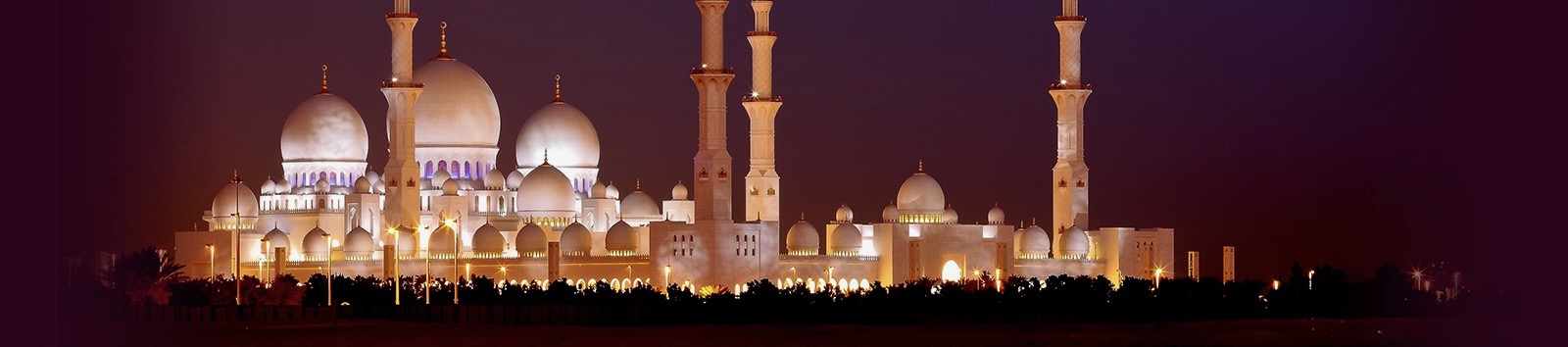
Abu Dhabi is the capital of the United Arab Emirates and the capital of the Emirate of Abu Dhabi. It is the UAE’s second-most populous city after Dubai. The city of Abu Dhabi is located on an island in the Persian Gulf, off the Central West Coast. Most of the city and the Emirate reside on the mainland connected to the rest of the country. The city is home to the UAE’s President, a member of the Al Nahyan family. We recently were told that Brian (Dugas men) has a very old paternal connection that dates back a few thousand years to one of the ruling families, Al Suwaidi, in Abu Dhabi – though this didn’t help us get a room in the palace :).
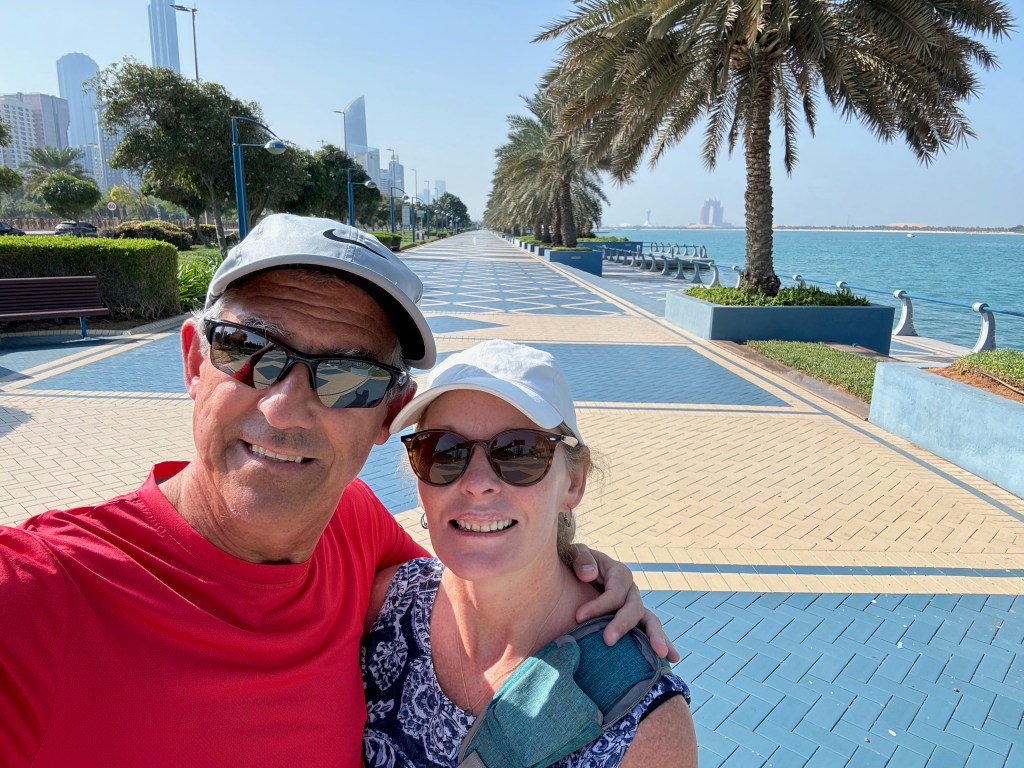
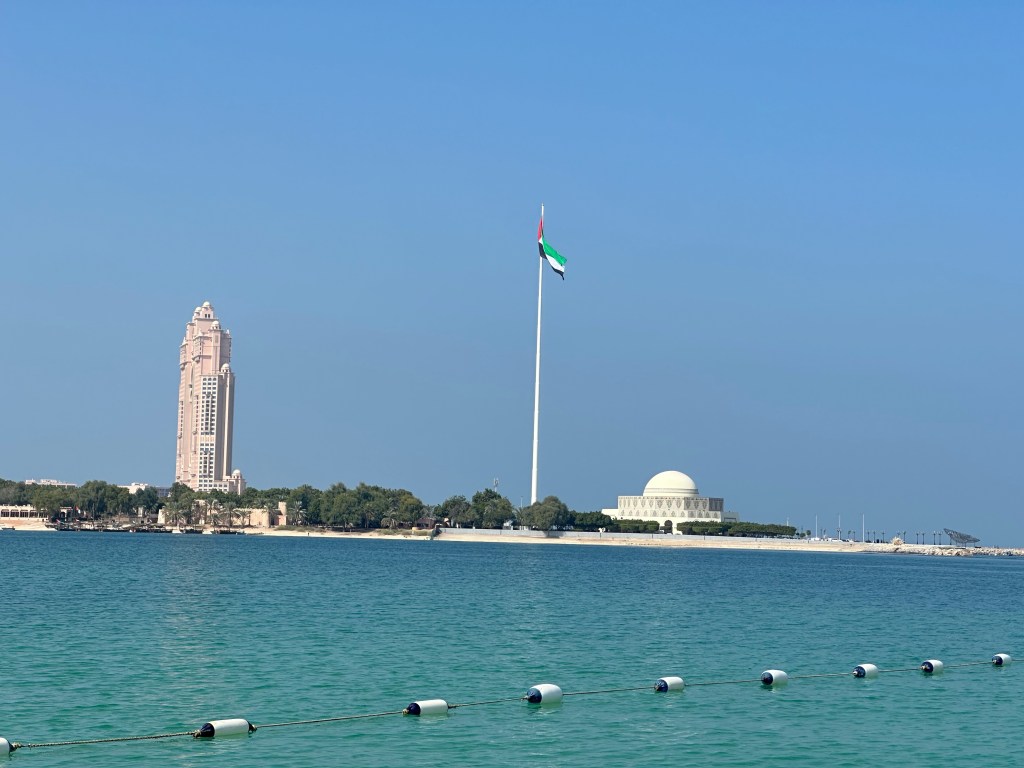
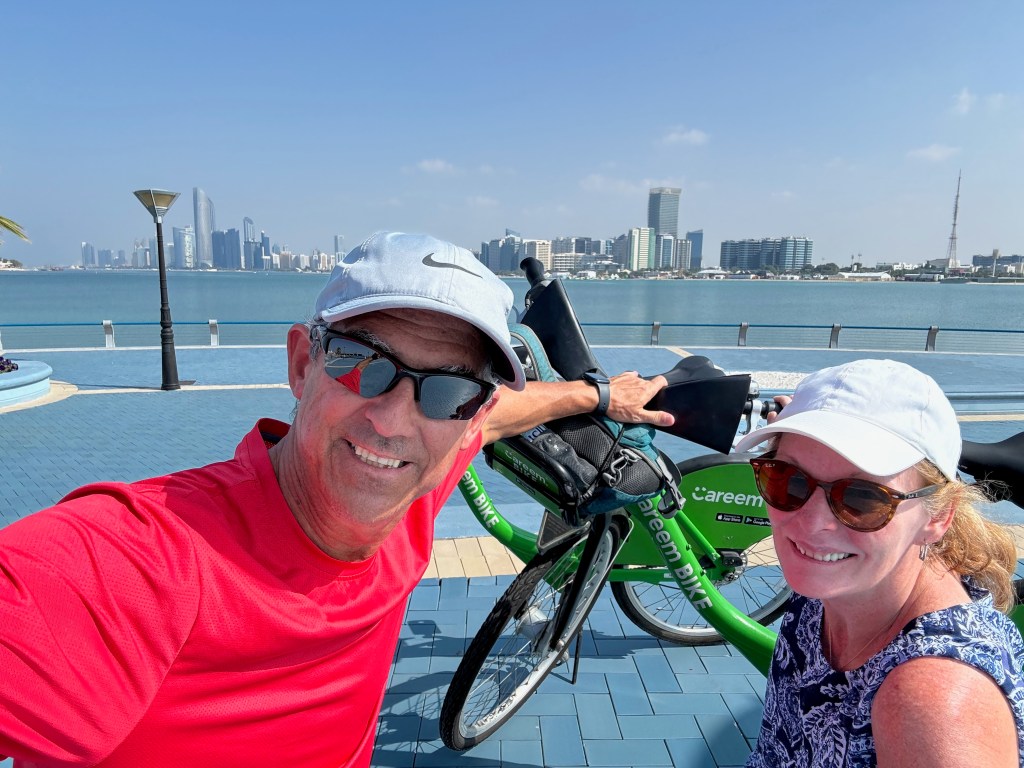
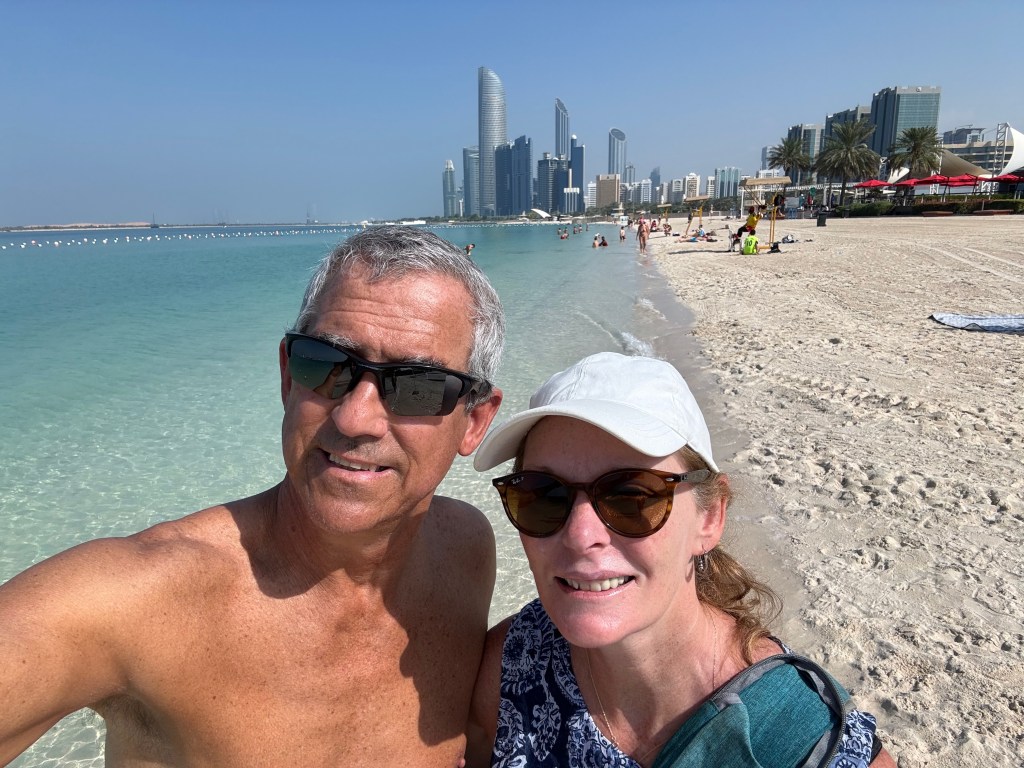
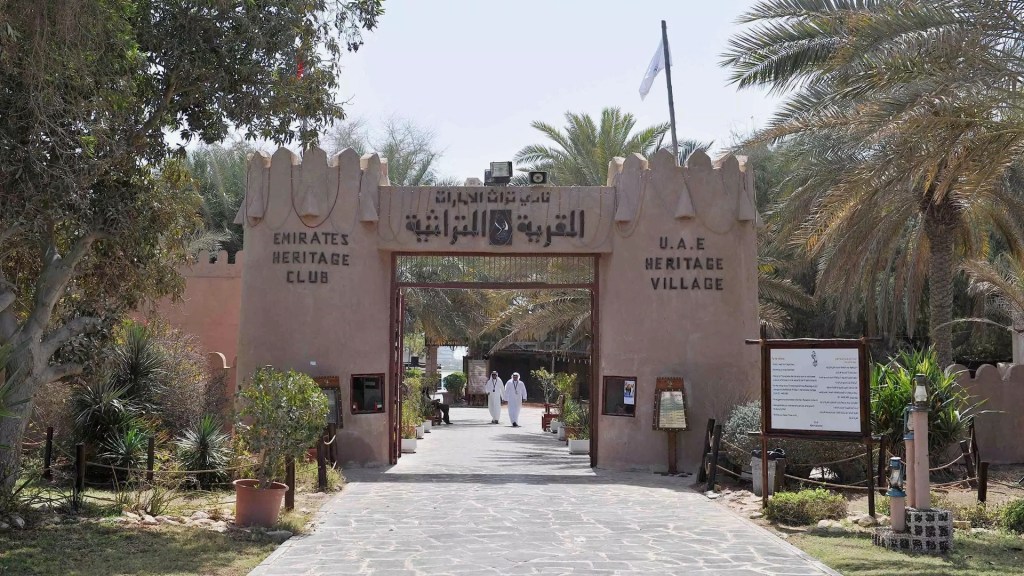
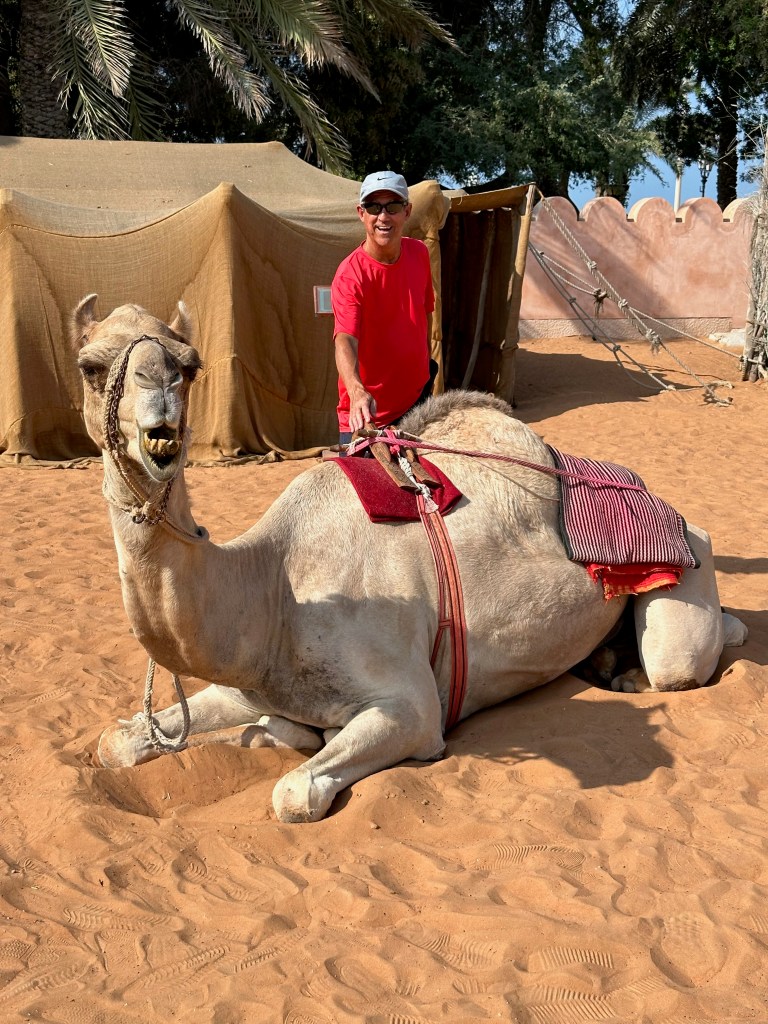
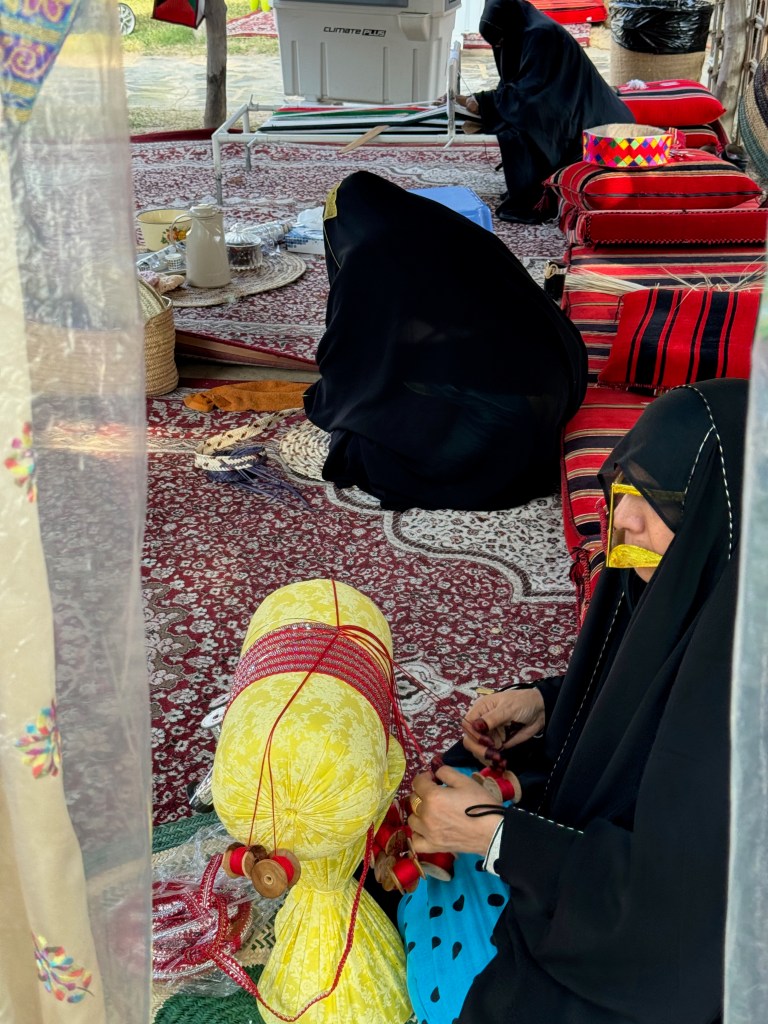
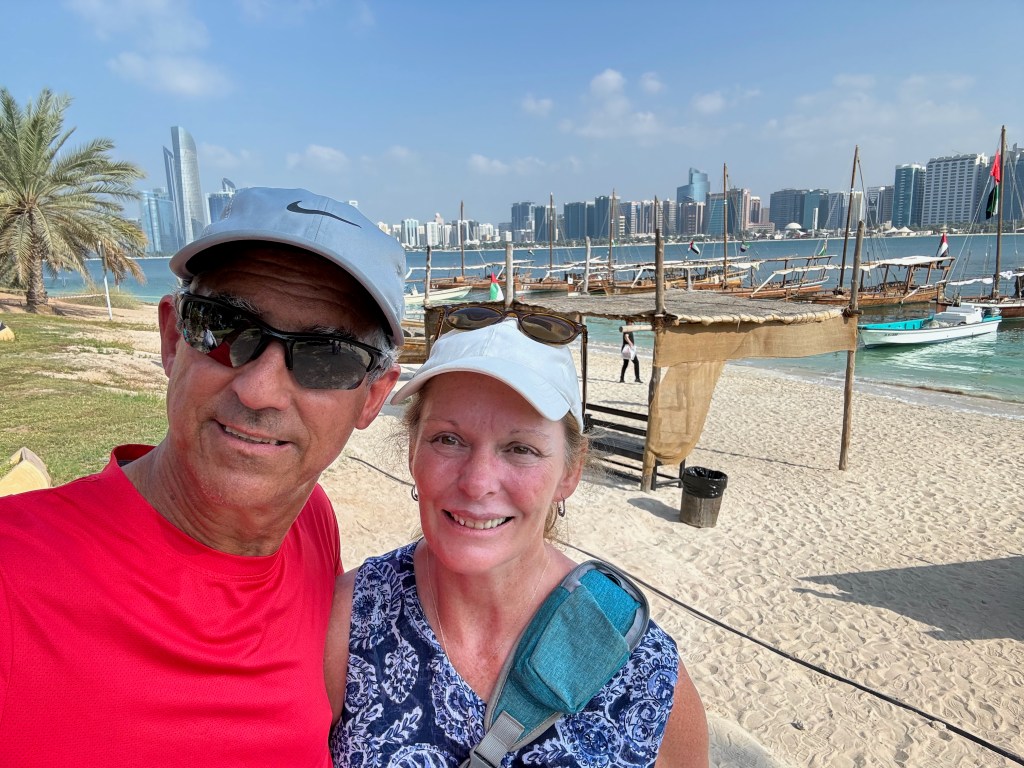
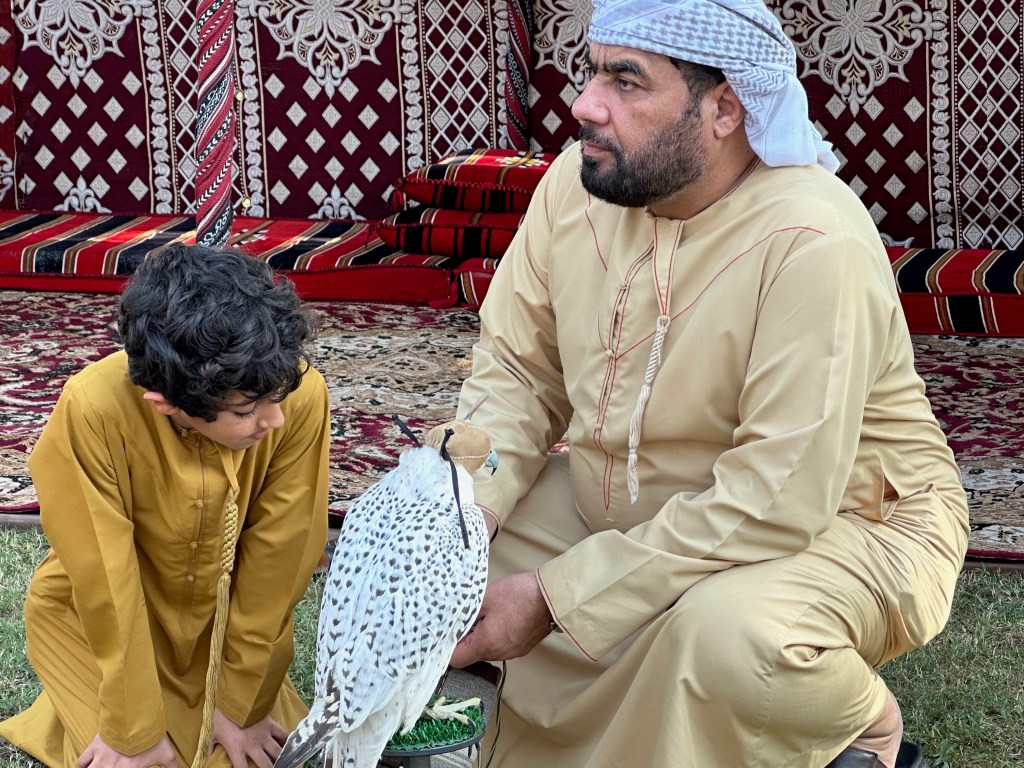
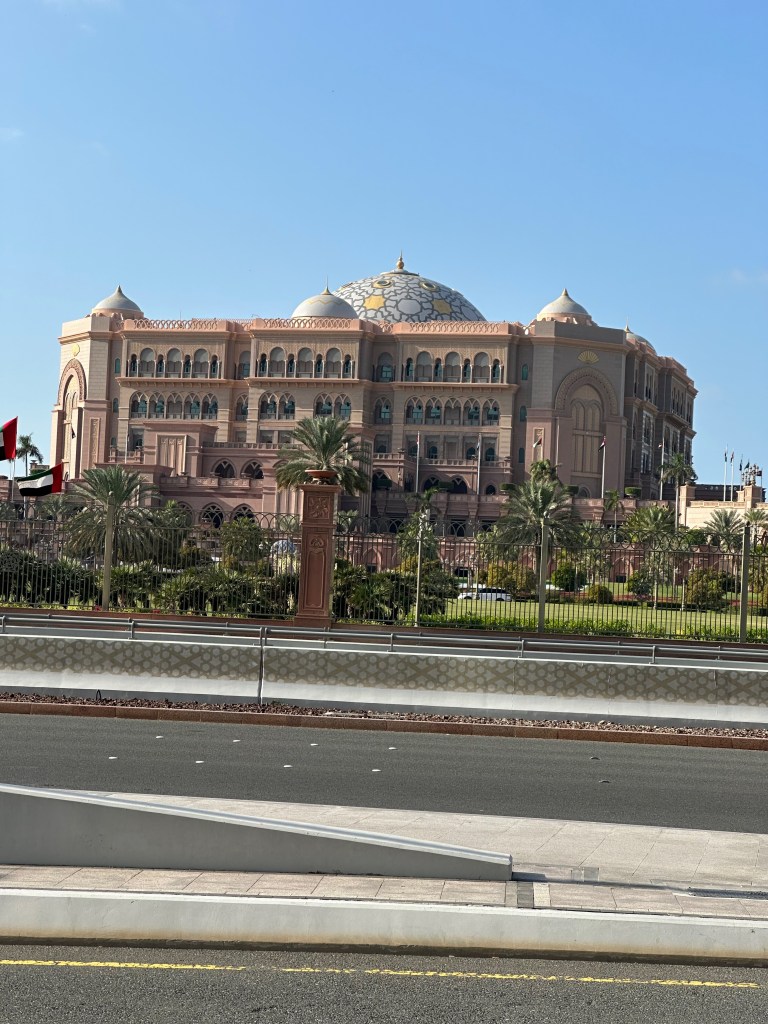
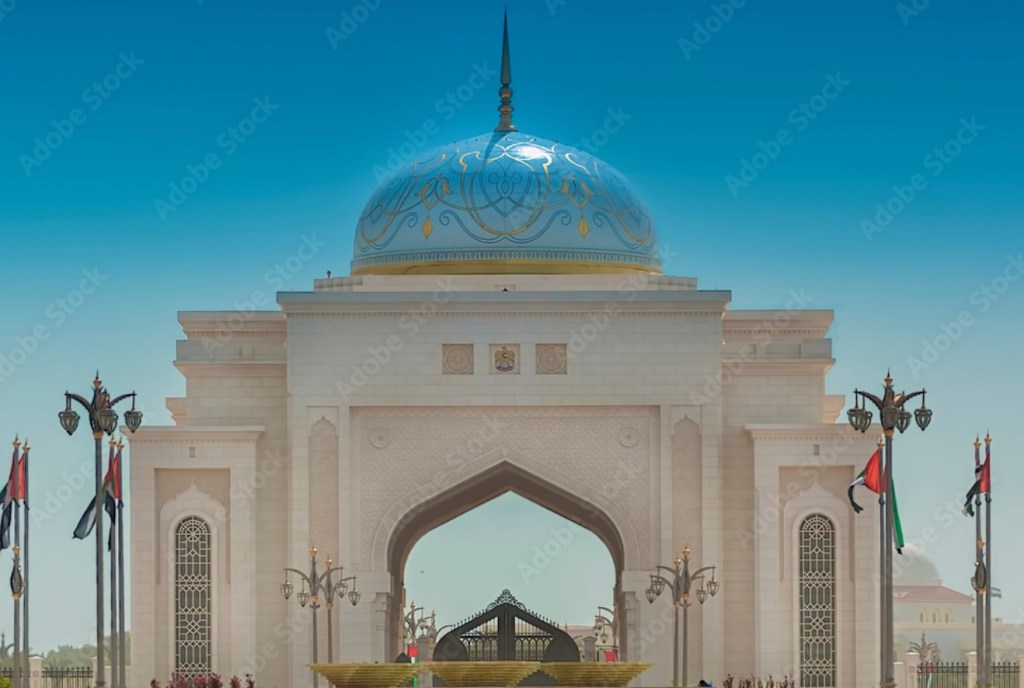
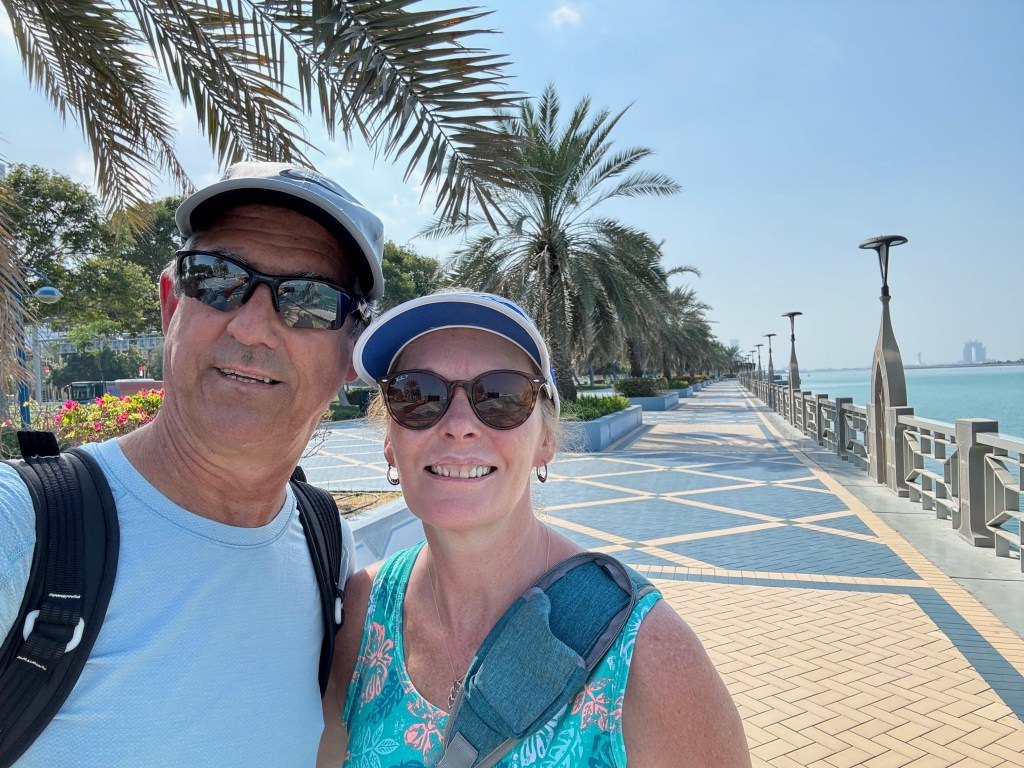
We had three days to explore Abu Dhabi. Our first day we biked the Abu Dhabi’s Corniche which stretches across an impressive eight kilometres of manicured waterfront boasting children’s play areas, separate cycle and pedestrian pathways, cafés and the stunning Corniche Beach. We stopped for a quick walk along the beach and then continued on to Heritage Village. This village is an immersive experience in the traditional way of life in the desert as well as offering a glimpse at Abu Dhabi’s past through an old-world souk, mosque and pearling boat display. From here we biked past the Emirates Palace Hotel and the entrance to the Presidential Palace but did not go into either. One interesting thing I learned was that pearl diving was a key industry prior to the discovery of oil reserves. Pearl divers dive for one to three minutes and would have dived as many as thirty times per day. Air tanks and any other sort of mechanical device was forbidden. The divers had a leather nose clip and leather coverings on their fingers and big toes to protect them while they searched for oysters. The divers were not paid for a day’s work but received a portion of the season’s earnings.

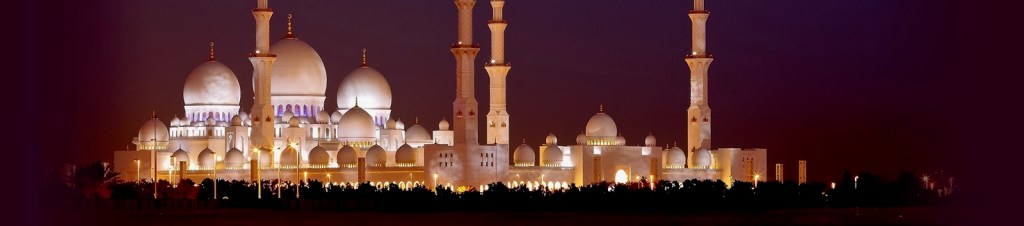
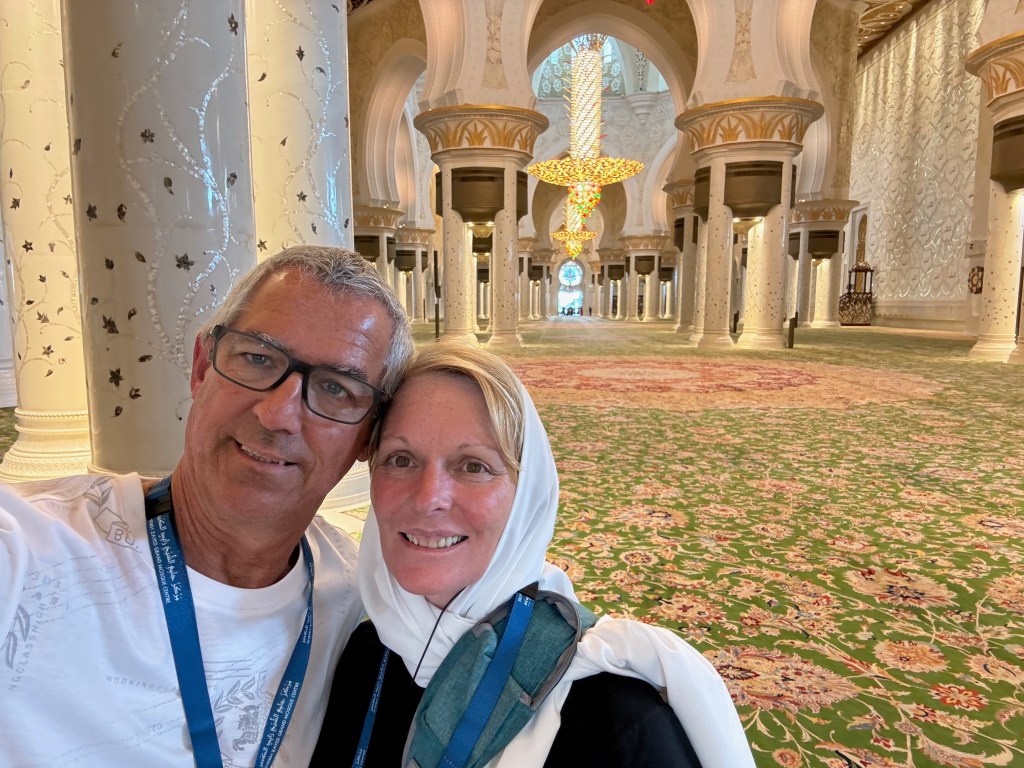
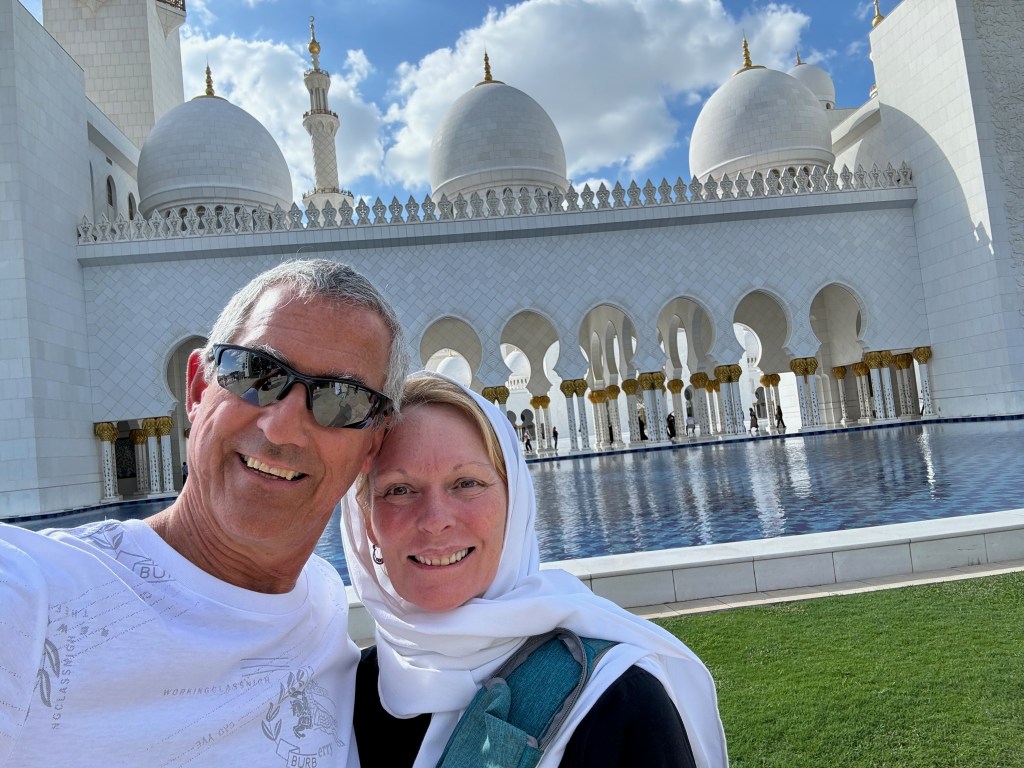
The second day was dedicated a visit to the Sheikh Zayed Grand Mosque. Reviewing the dress code and other requirements for entry into the mosque we set off to catch the local transportation that would take us there. The UAE boasts many beautiful mosques big and small but this one is the largest and grandest of them all. Constructed between 1994 and 2007 the building covers an area of more than 12 hectares (30 acres). This mosque was breath-taking with many amazing features.
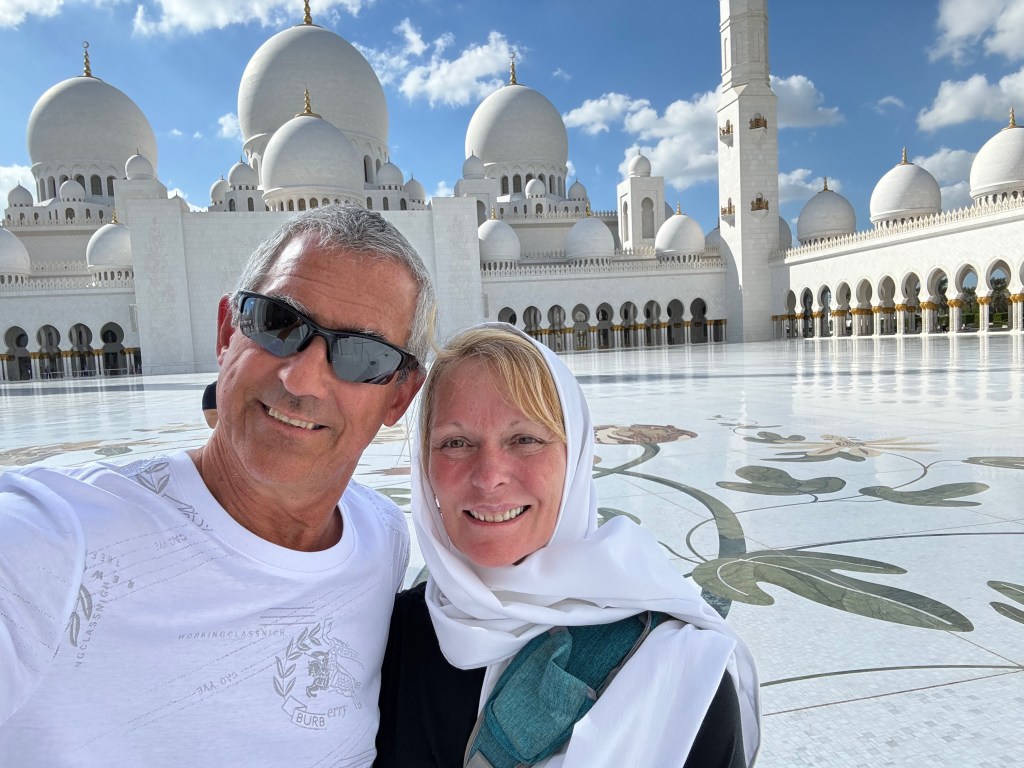
The courtyard (Sahan), often used during significant Islamic prayers and large gatherings such as the holy month Ramadan, Eid Al-Fitr (Feast of Breakfast) and Eid Al-Adha (Feast of Sacrifice) can accommodate up to 31000 worshipers, was constructed using thousands of marble pieces to create beautiful floral elements that grow in the Middle East such as the tulip, lily and iris.
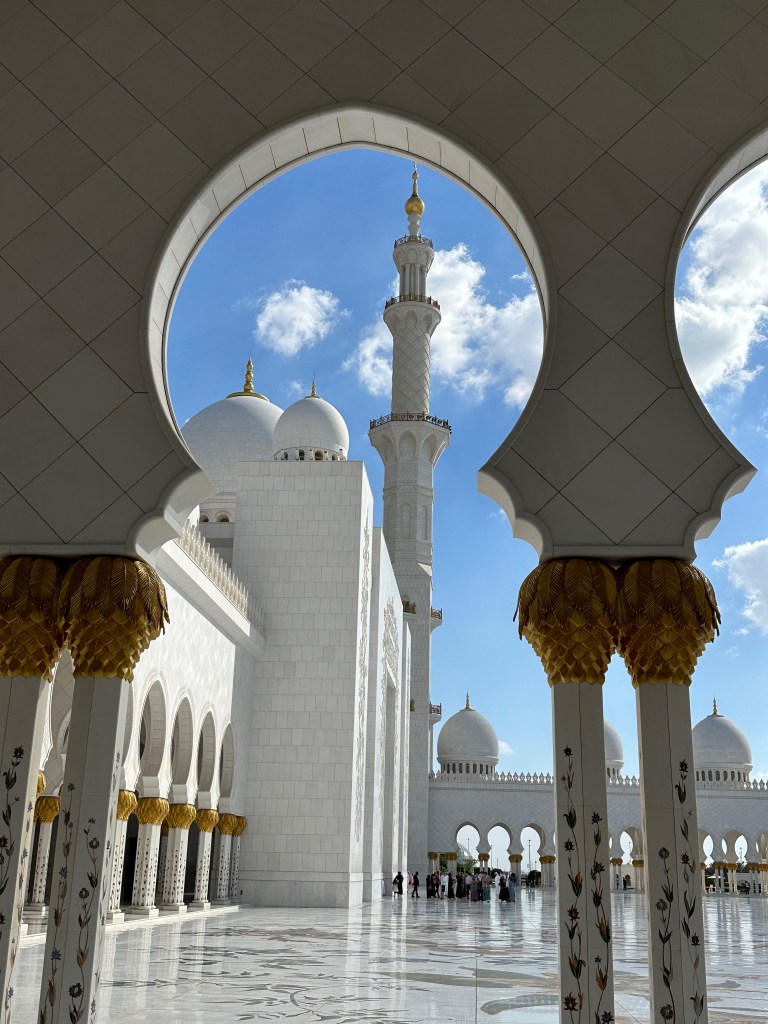
Four minarets, derived from the Arabic word “Manarah”, meaning lighthouse, rise 106 meters and are made-up of three different geometric shapes: the square that forms the minaret’s base built according to the Arabic Moroccan architectural styles; the octagon, a design that goes back to the Mameluke era; and, a cylinder, which emerged during the Ottoman era. Each minaret is topped with a crowning lantern covered with gold-glass mosaic added during the Fatimid era.
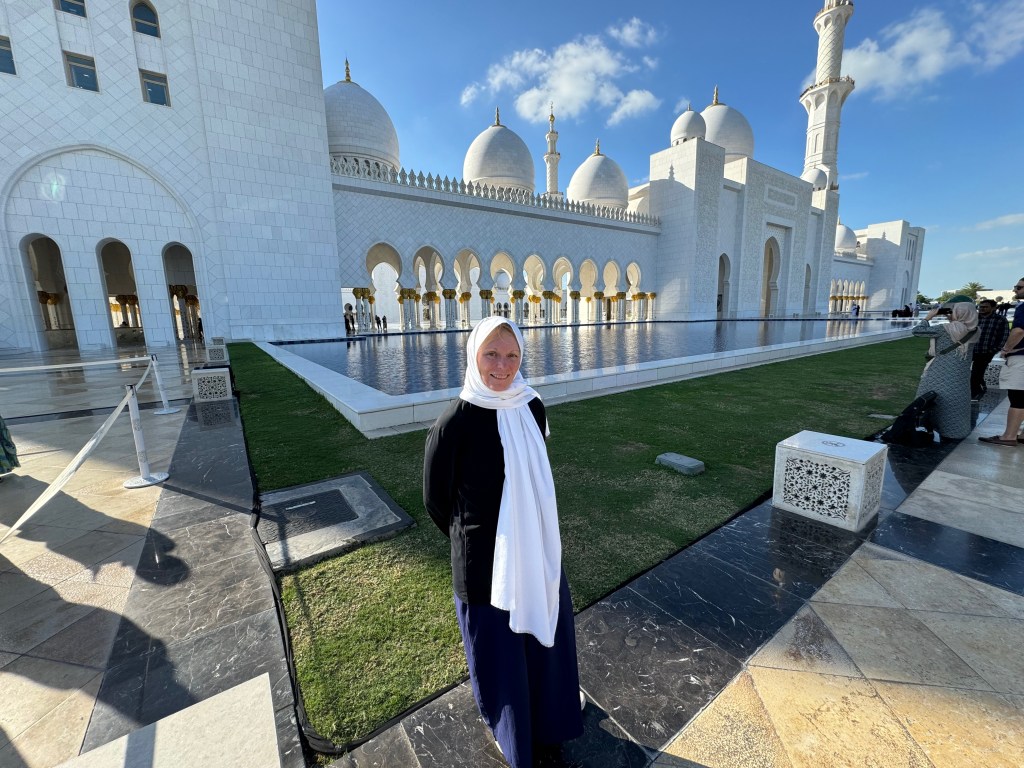
Eight-two (82) domes of various sizes constructed of pure white marble cladding with onion shaped ‘crowns’, crescent shaped finials decorated with gold-glass mosaic and traditional Moroccan artwork encircled with verses from the Holy Quran.
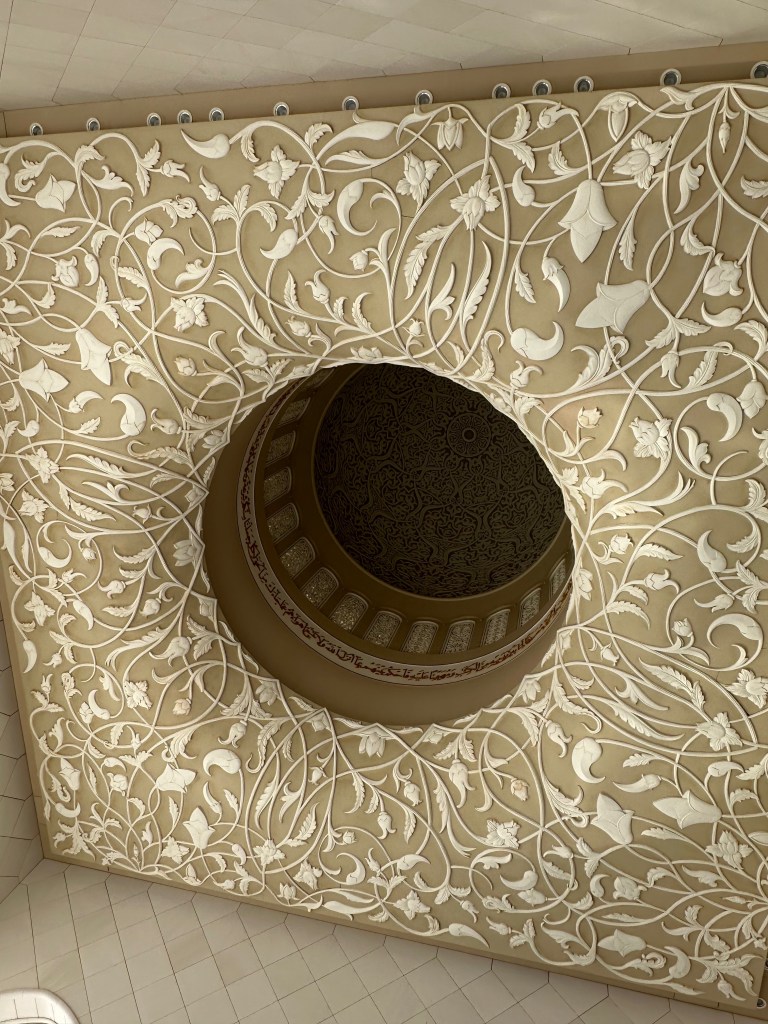
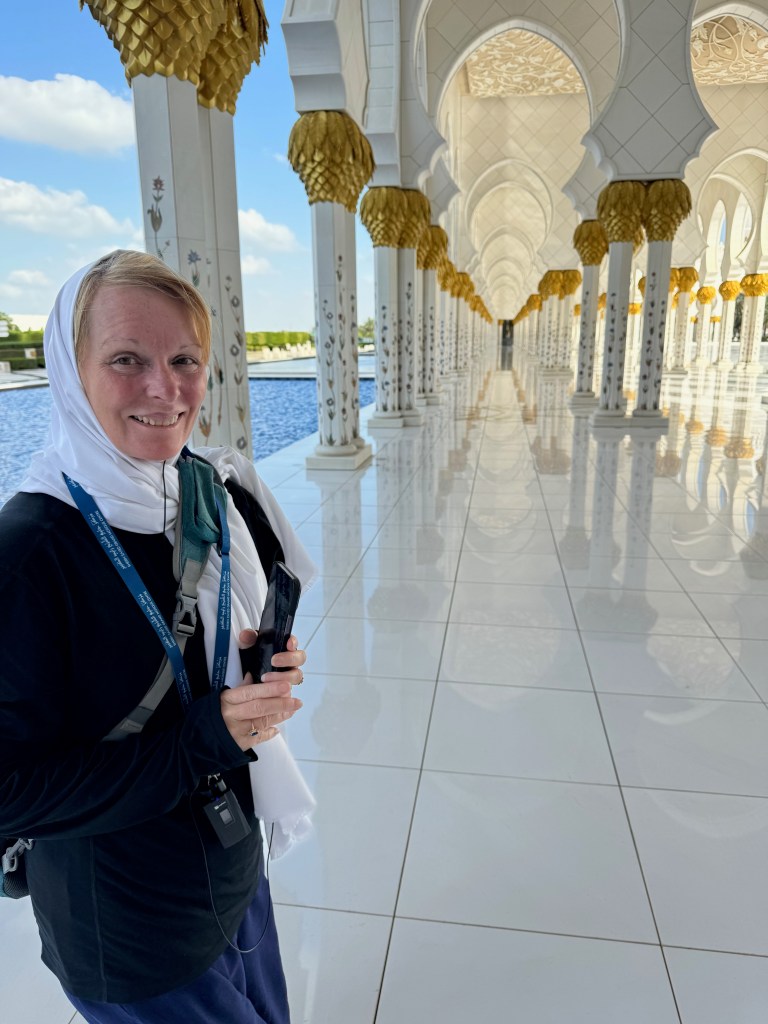
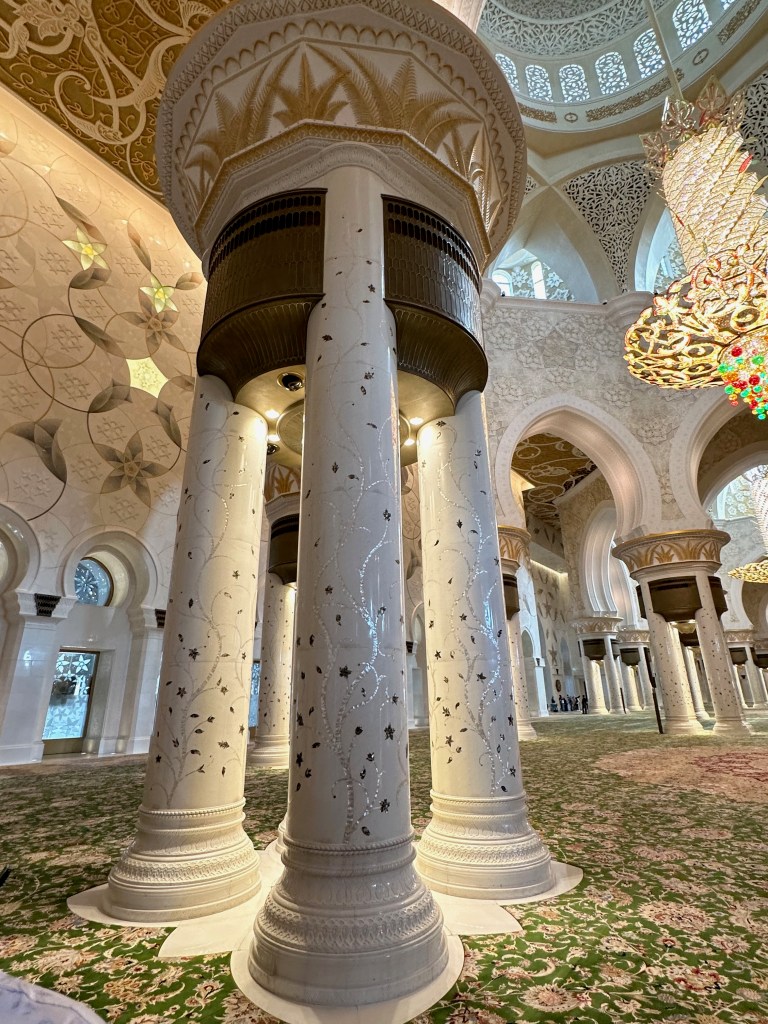
Thousands of columns, 1096 external ones around the outside arcade all made of white marble panels inlaid with precious and semi-precious stones with a design inspired from the date palm – a tree valued throughout Arabia – as well as the 96 internal columns arranged in groups of four, to provide structural support for the three main domes in the main prayer hall clad with white pure marble inlaid with mother-of-pearl vines.
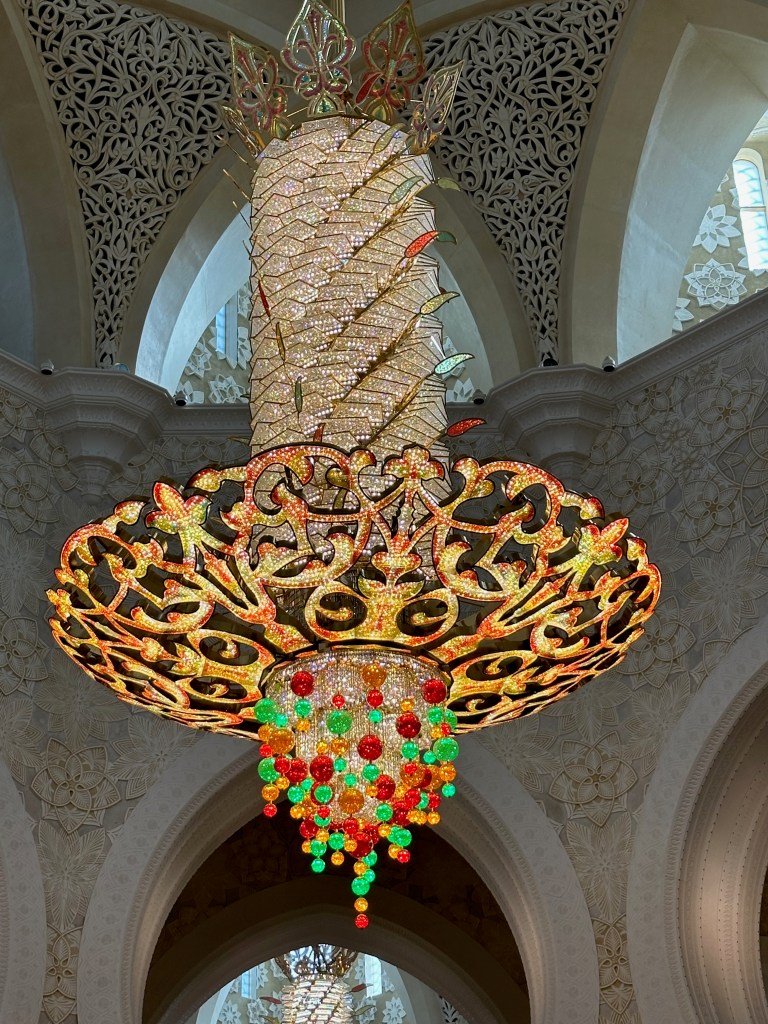
Seven imported chandeliers incorporating millions of Swarovski crystals and Murano glass with one of the world’s largest situated inside the main prayer hall and weighing in at ~12 tons.
A carpet in the main prayer hall, considered to be the world’s largest carpet measuring 60,570 sq ft, with close to 2,268,000,000 knots made by ~1300 female carpet knotters over a two year period.
And several rectangular pools surrounding the mosque, tiled in different shades of blue, keeping worshippers cool and reflecting the mosque’s magnificent columns at night.
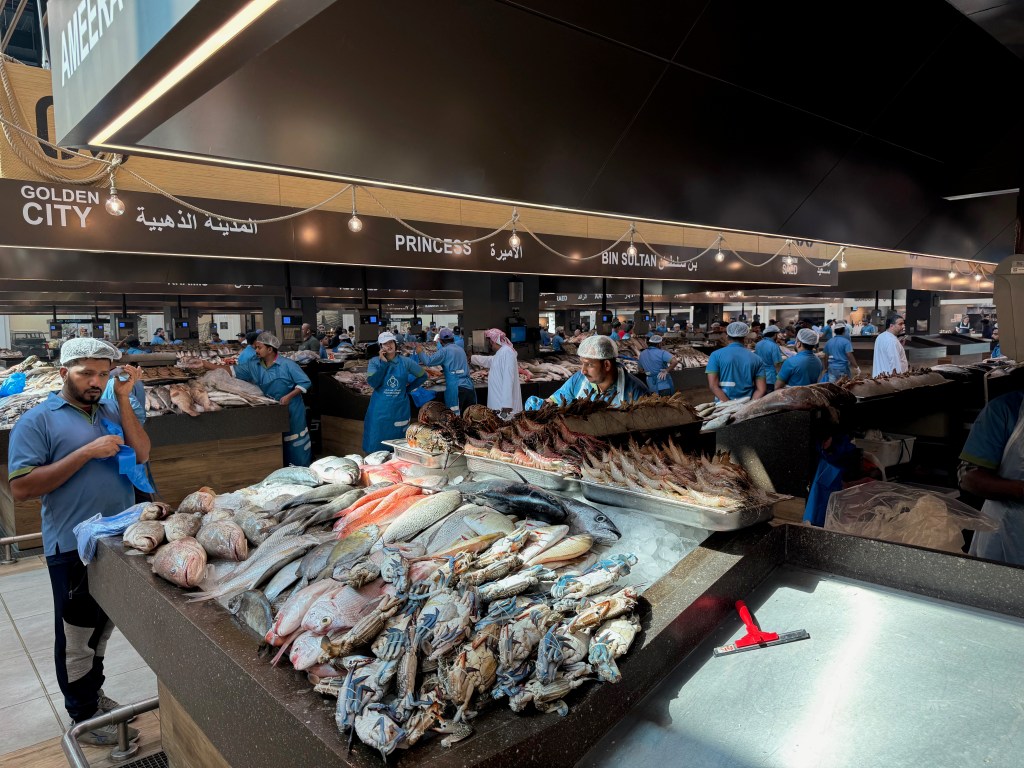
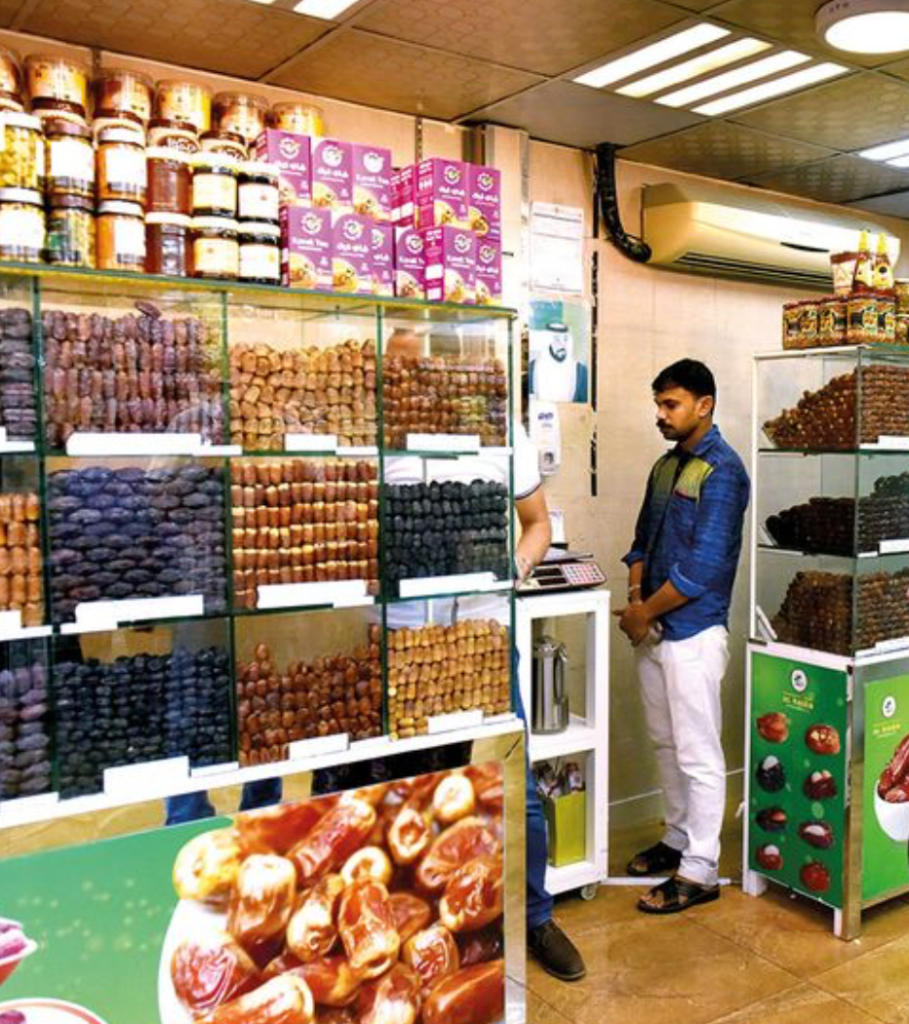
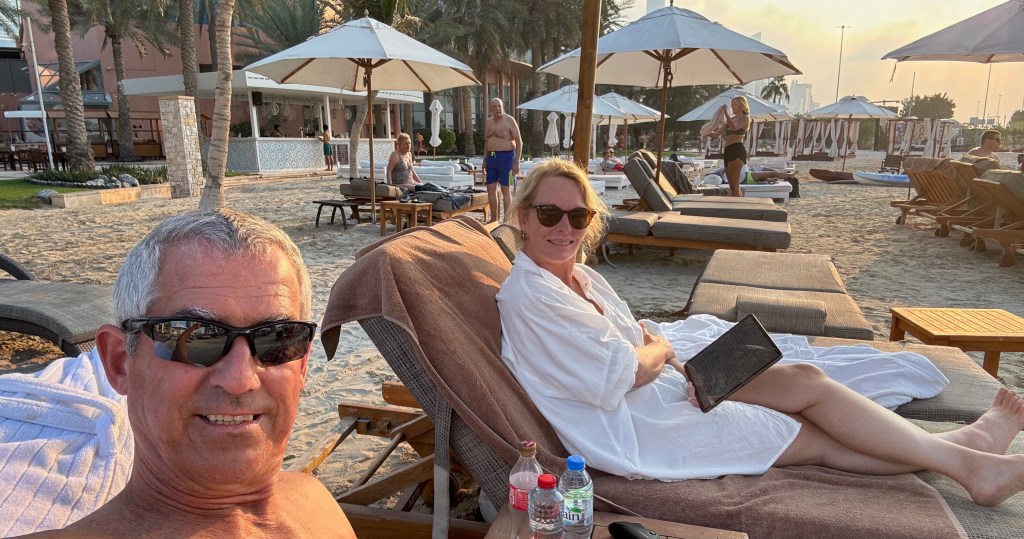
For our last day we decided to walk along the corniche the other way and visit the fish and date markets. These were not tourist markets but catered to local and commercial clients. They were very interesting. After our visit we walked back to the hotel and spent our last afternoon by the beach and pool.
Definitely a great adventure in Abu Dhabi with a lot of exploring still to do – perhaps another visit some day!
 Baker Vacations