Barcelona is a city on the northeastern coast of Spain founded as a Roman city in the Middle Ages. It is the capital and largest city of Catalonia, as well as the second-most populous municipality of Spain.
Barcelona has a rich cultural heritage and is a major tourist destination. Particularly renowned are the architectural works of Antoni Gaudí and Lluís Domènech i Montaner, which have all been designated UNESCO World Heritage sites.
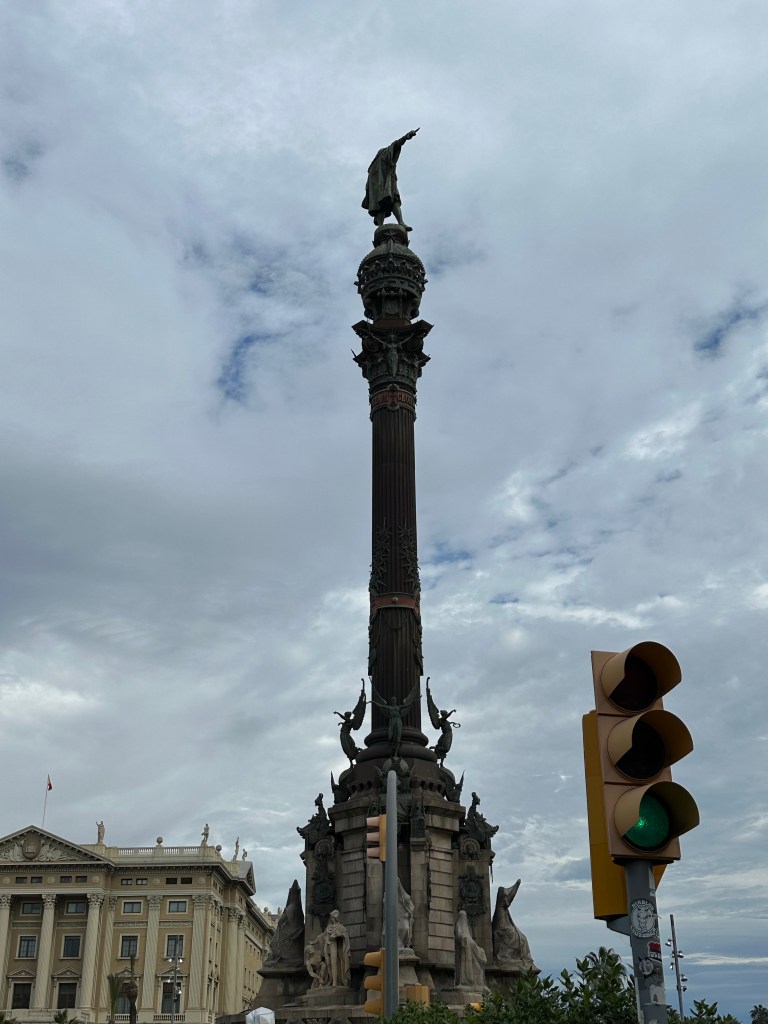
Today we ventured off the ship with the goal of seeing three of Gaudi’s buildings spread throughout the city centre. We started our walk at the statue of Columbus which is located at the bottom of one of the best known streets in Barcelona – La Rambla. Las Rambla is a large pedestrian boulevard which runs through the heart of the city centre. The street reminded me of the main street in Alicante with its tiled mosaic walkway, restaurants and vendors.
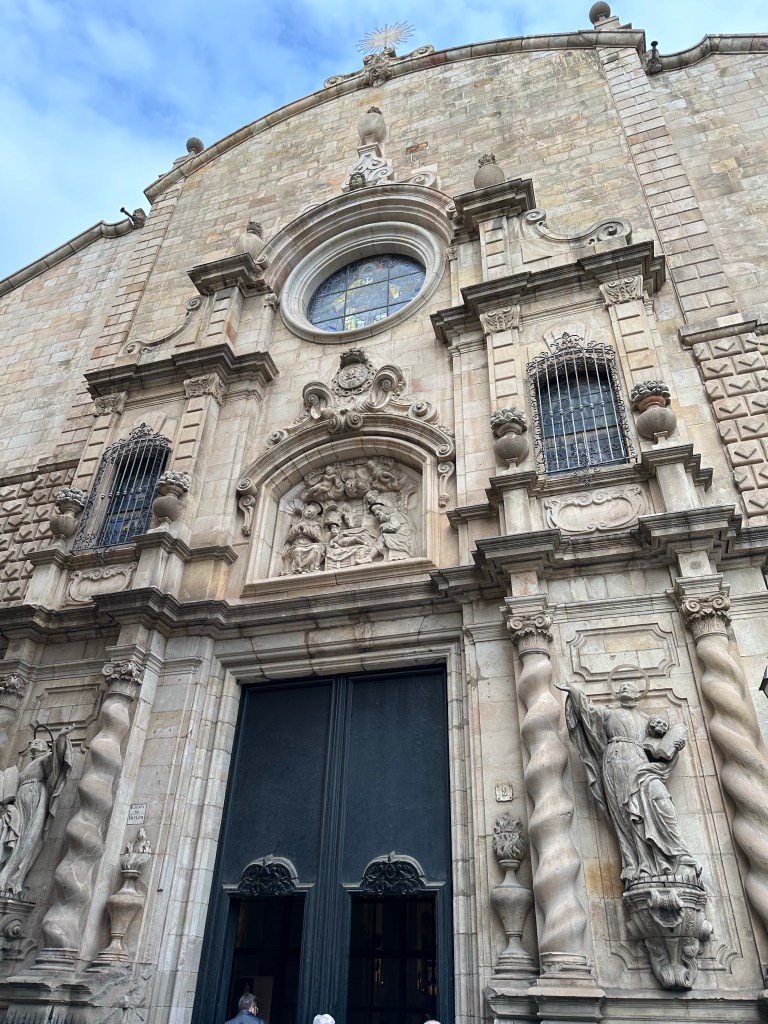
Our first stop was Iglesia de Betlem for a quick peek. Inglesia de Betlem is a baroque-style church built in the early 18th century but was closed to worshippers following the expulsion of the Jesuits from Spain in 1767 and then again founded in 1835 but, unfortunately, suffered a second fire in 1936 during the Spanish Civil War. The roof and sumptuous baroque interior were consumed by the flames while the exterior facade remained.
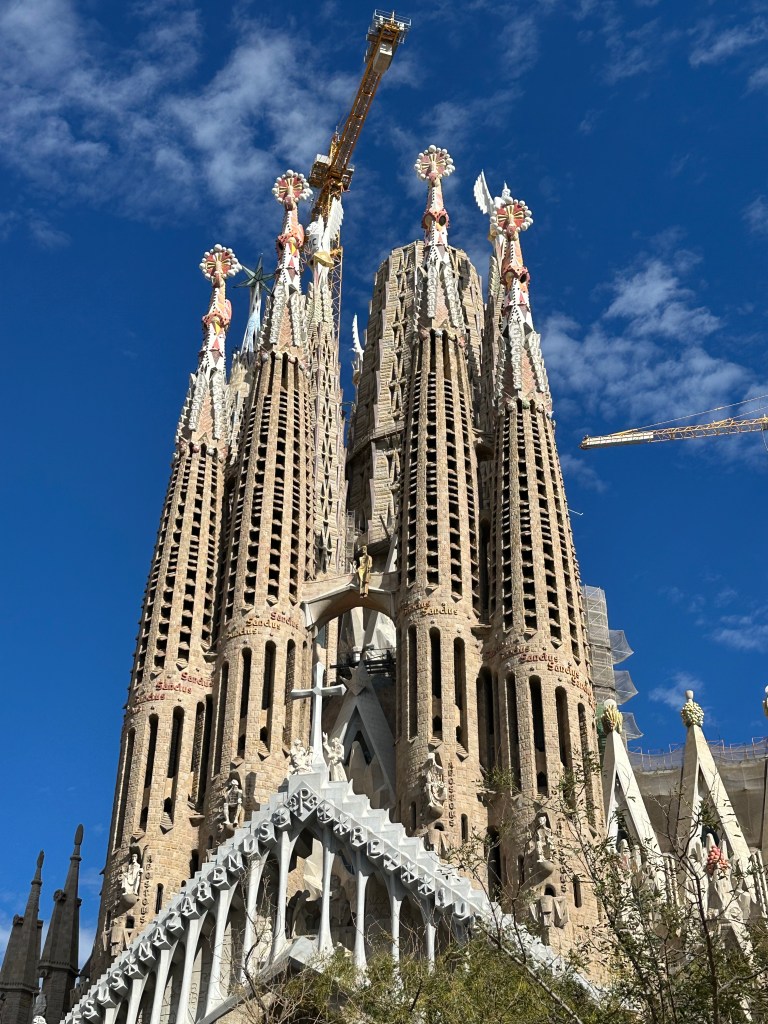
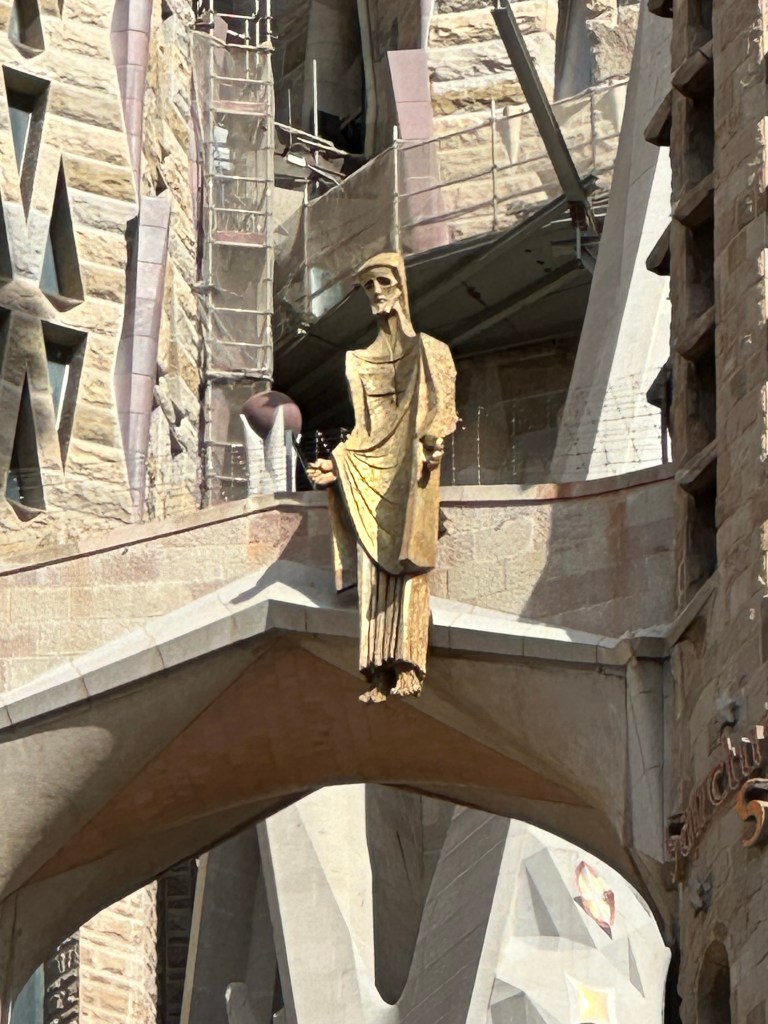
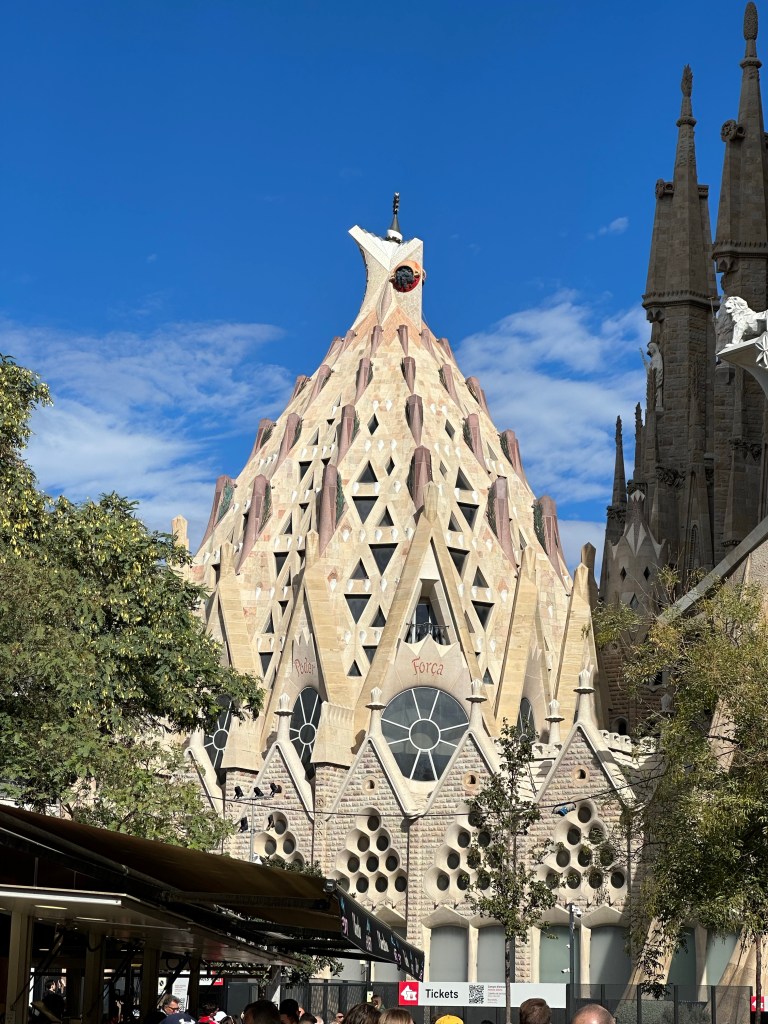
From here we continued up La Rambla, through several narrow side streets and large squares on to the Sagrada Familia – our first Gaudi building.
Antoni Gaudí is a universal figure in modern architecture. His works are unique incorporating his passions for architecture, nature and religion while integrating crafts such as ceramics, stained glass, wrought ironwork forging, carpentry, as well as the use of materials such as waste ceramic pieces.
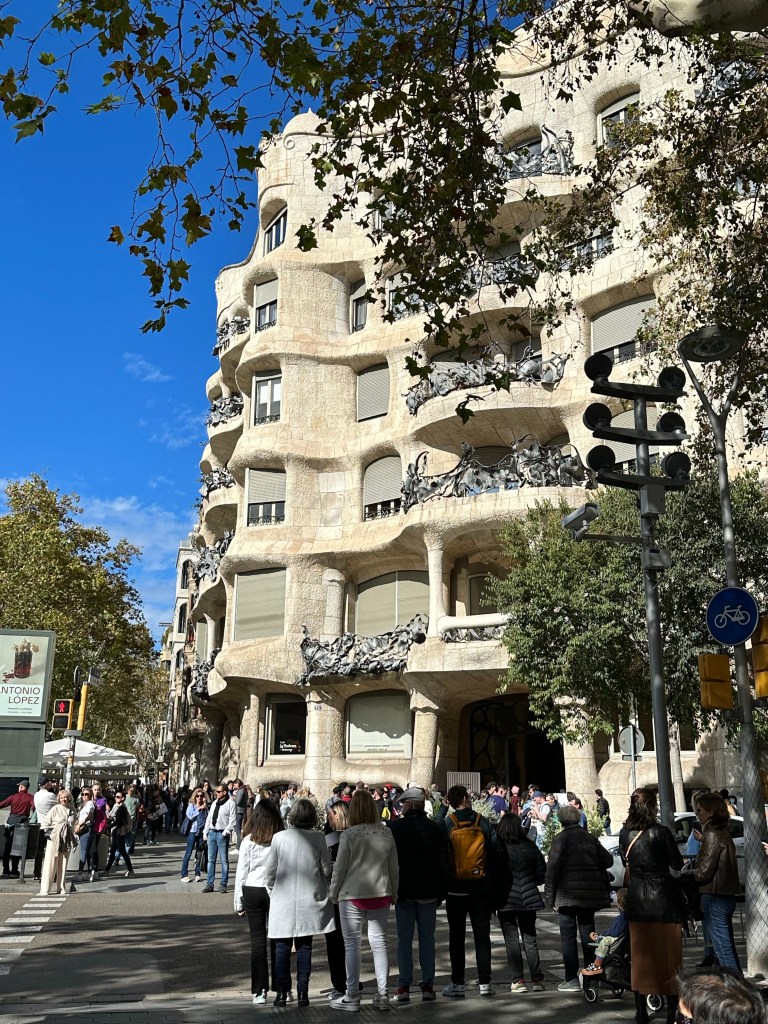
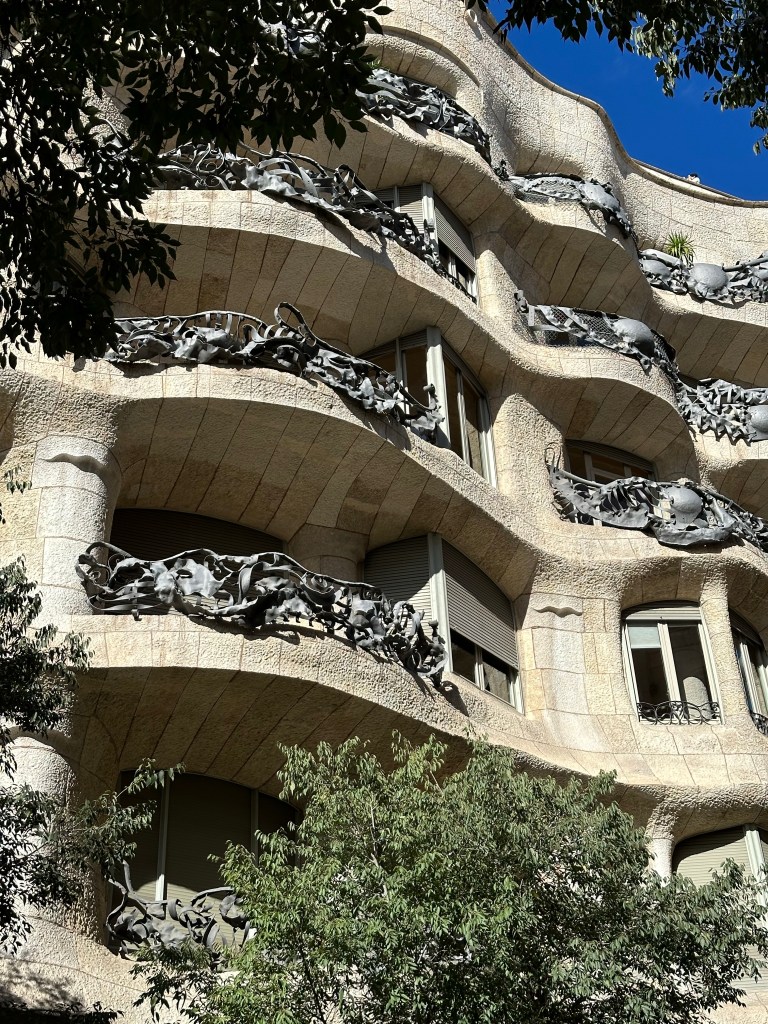
Next stop was Casa Milà, popularly known as La Pedrera – “the stone quarry” a Modernista building and the last private residence designed by Gaudi. It was built between 1906 and 1912 and during this time it was controversial because of its undulating stone facade and twisting wrought iron balconies. In 1984, it was declared a World Heritage Site by UNESCO.
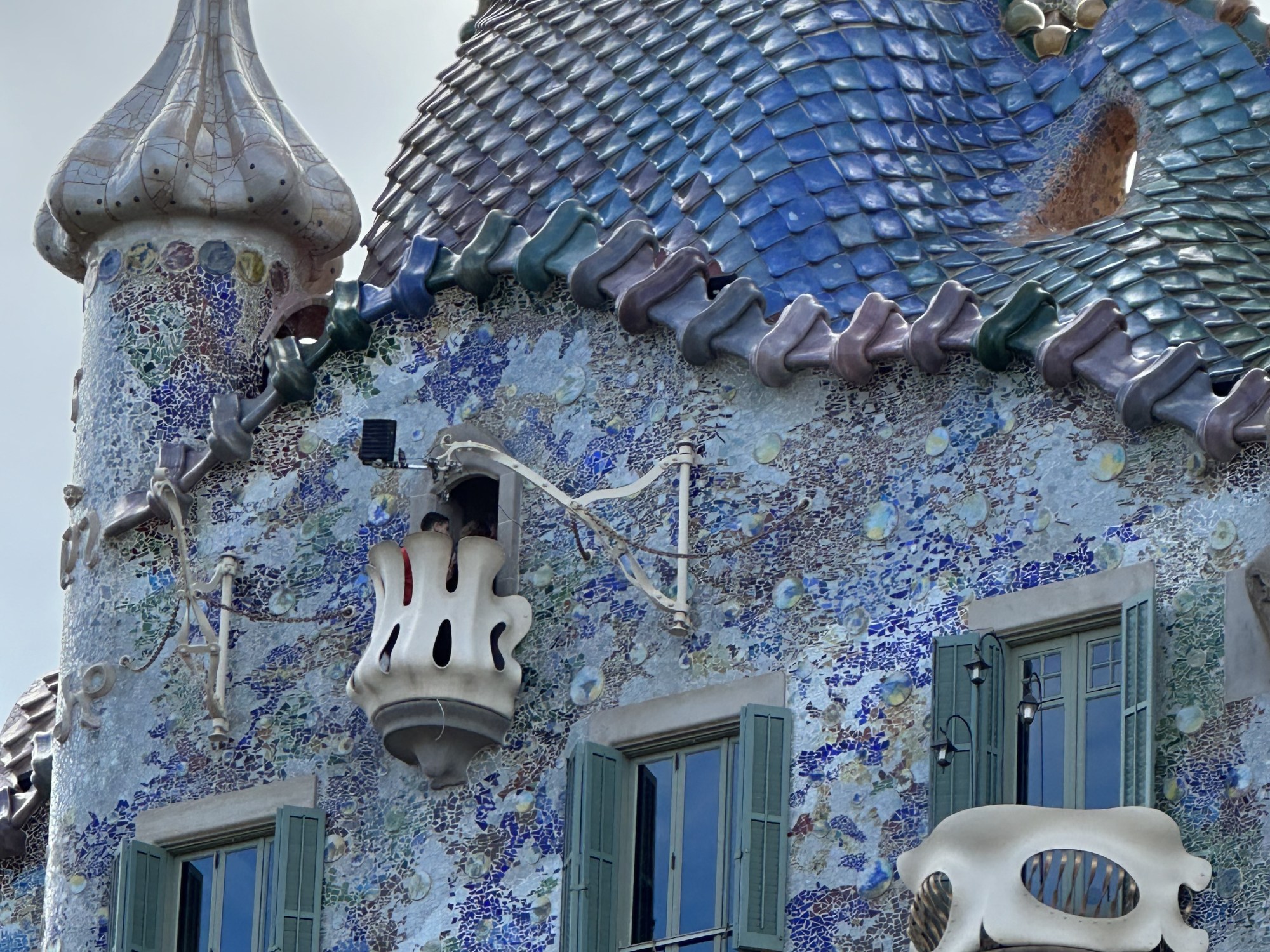
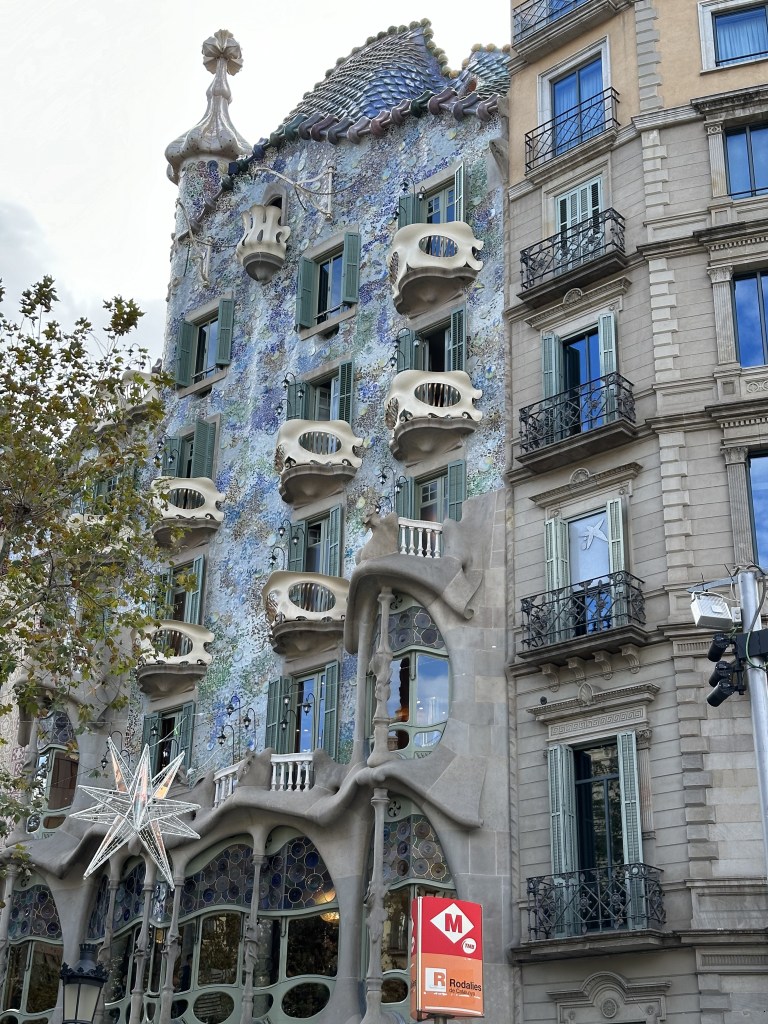
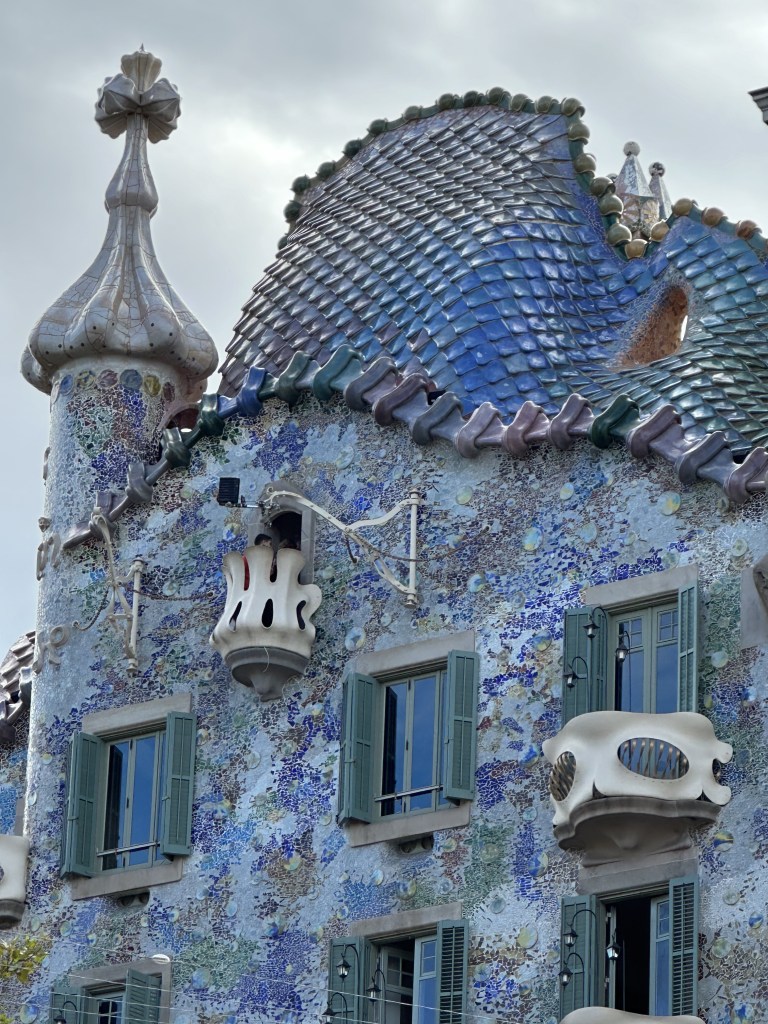
Last Gaudi stop was Casa Batlló. This is a remodel of a previously built house redesigned in 1904. It forms part of a row of houses known as the Illa de la Discordia. The local name for the building is House of Bones (Casa dels ossos) as it has a skeletal quality. Like everything Gaudí designed, Casa Batlló is only identifiable as Modernisme in the broadest sense due to the unusual lines, irregular oval windows and flowing sculpted stone work with much of the façade decorated with a colorful mosaic made of broken ceramic tiles (trencadís).
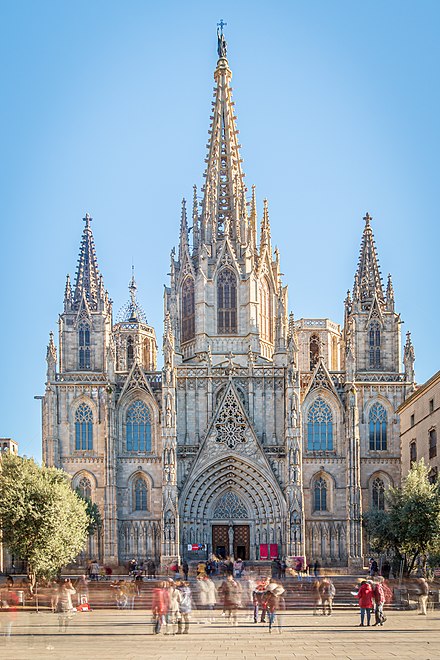
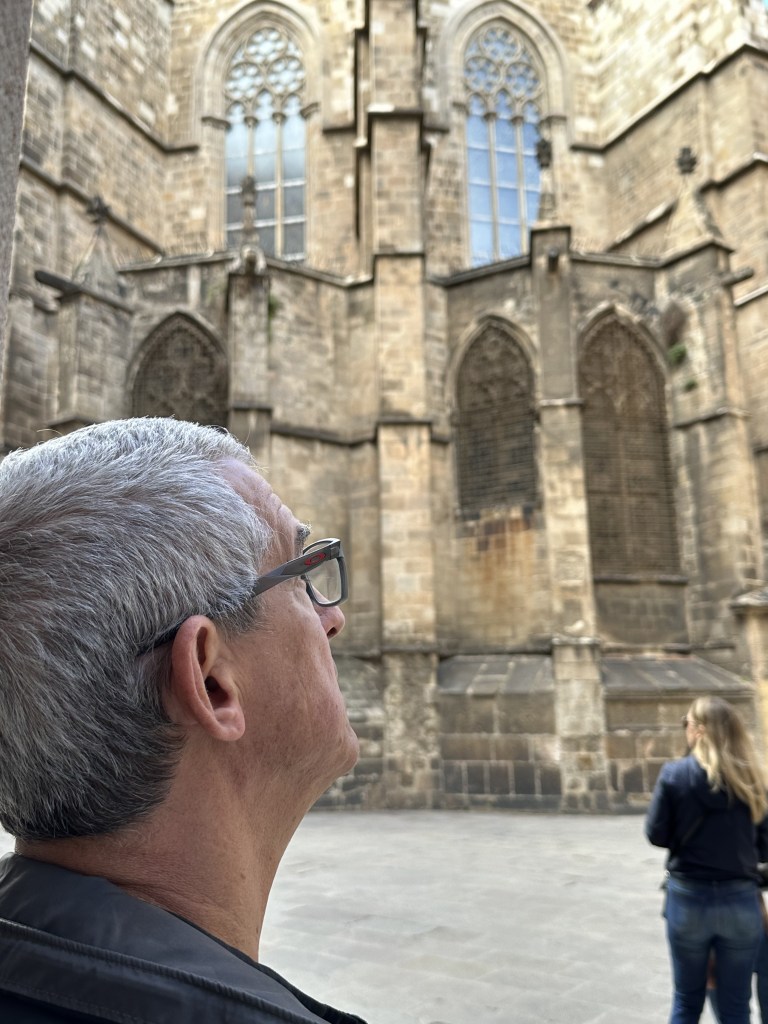
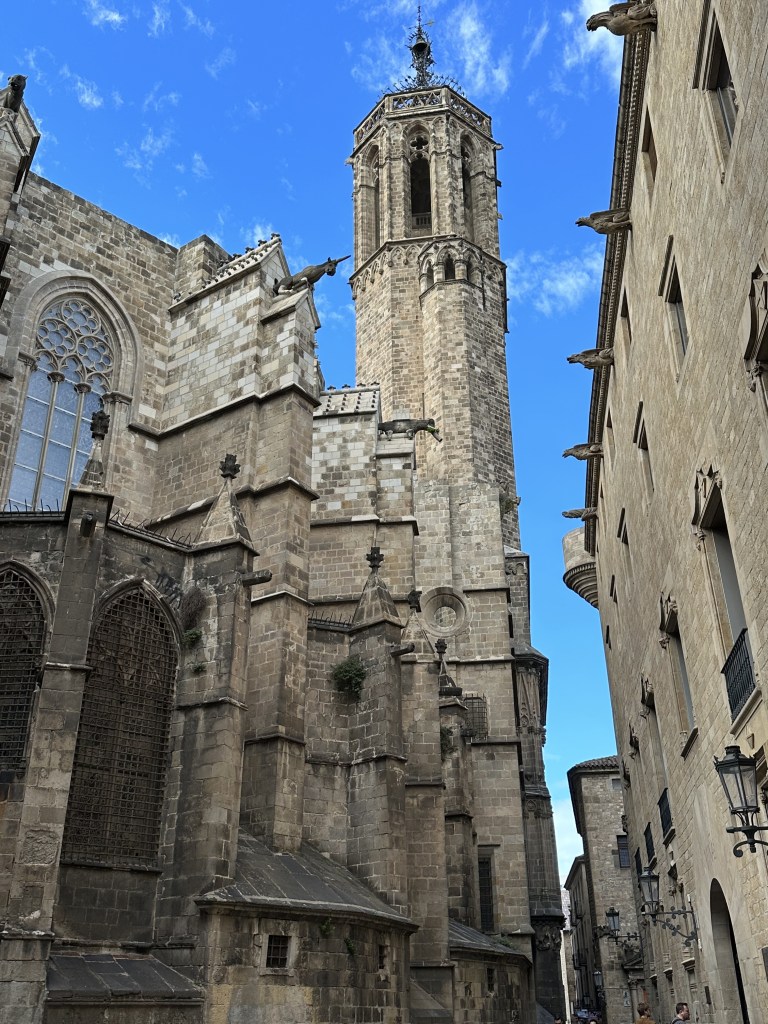
The last site on our walk was the Barcelona Cathedral. The cathedral was constructed from the thirteenth to fifteenth centuries, with the principal work done in the fourteenth century. The cloister, which encloses the Well of the Geese (Font de les Oques), was completed in 1448. In the late nineteenth century, the neo-Gothic façade was constructed over the nondescript exterior that was common to Catalan churches.[4] The roof is notable for its gargoyles, featuring a wide range of animals, both domestic and mythical.
 Baker Vacations
Gorgeous photos! Love the architecture!
Whynn
LikeLiked by 1 person