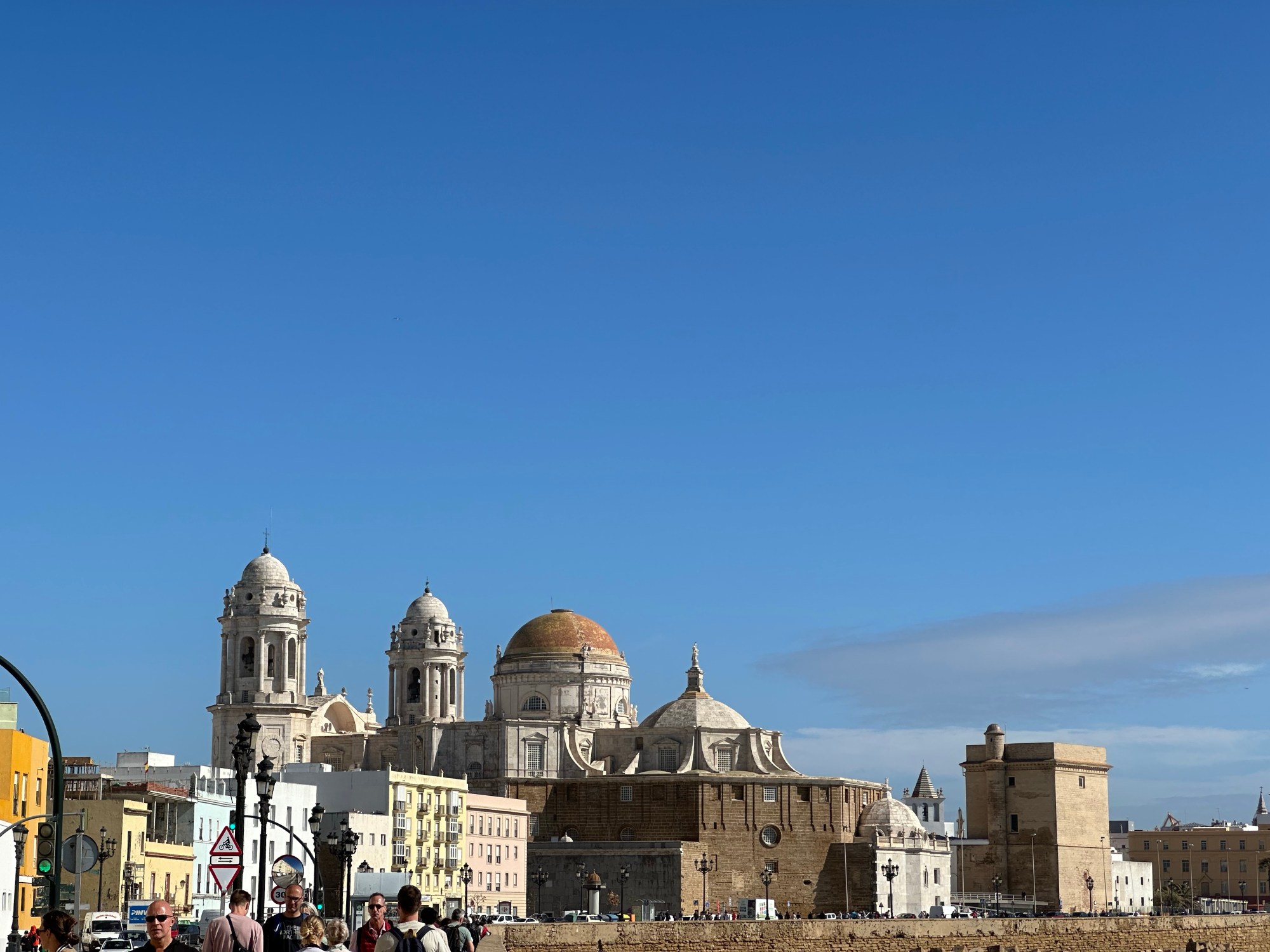
Cádiz is an ancient port city in the Andalucia region of southwestern Spain in the Iberian Peninsula off of the Atlantic Ocean. Situated on a narrow slice of land surrounded by the sea‚ Cádiz is a typical Andalusian city with well-preserved historical landmarks.
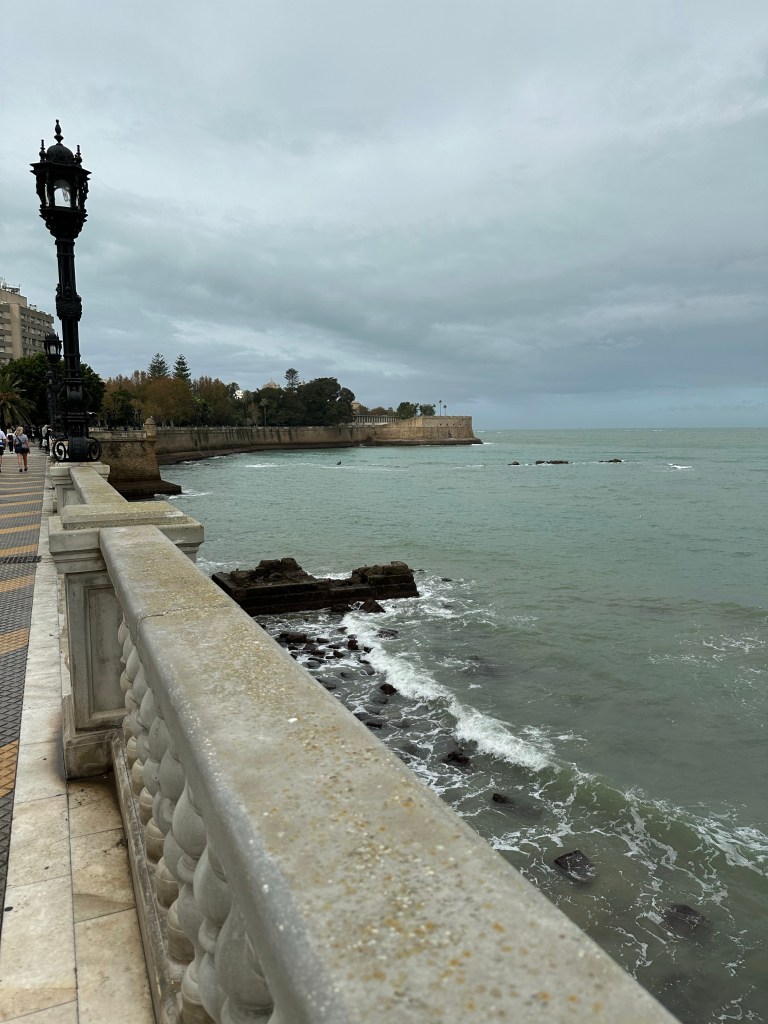
The older part of Cádiz, within the remnants of the city walls, is commonly referred to as the Old Town and represents a large area of the total size of the city. We walked along the wall following the ocean on a beautiful promenade dotted with numerous parks with several exotic plants, including giant trees, fountains and statutes.
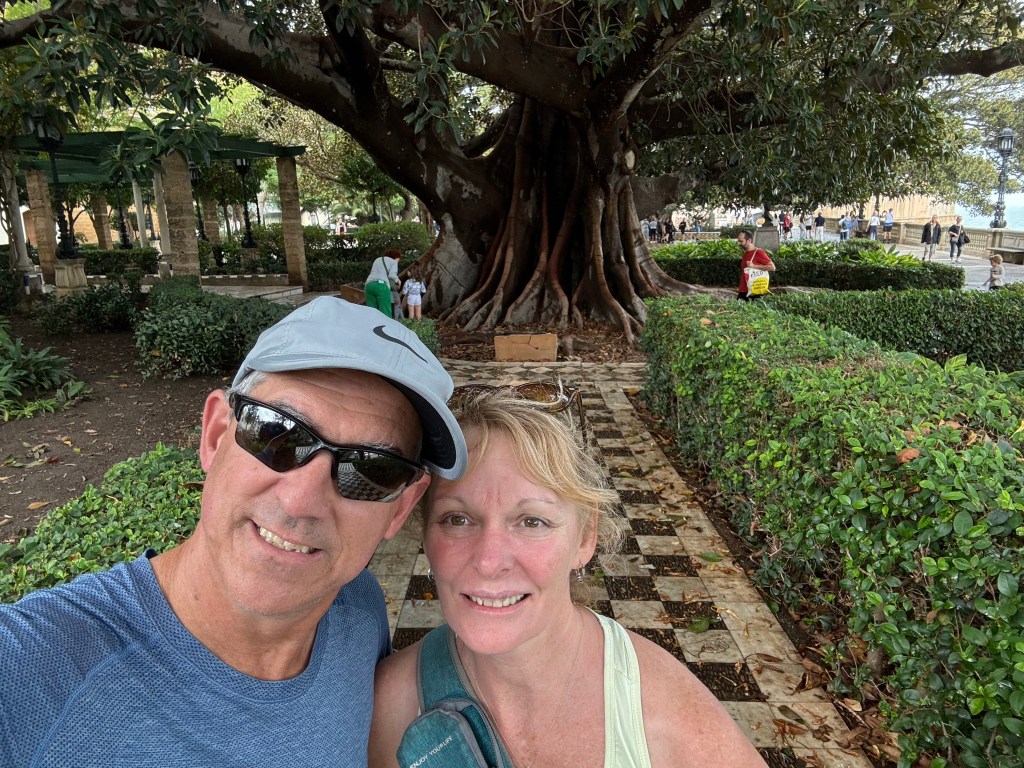
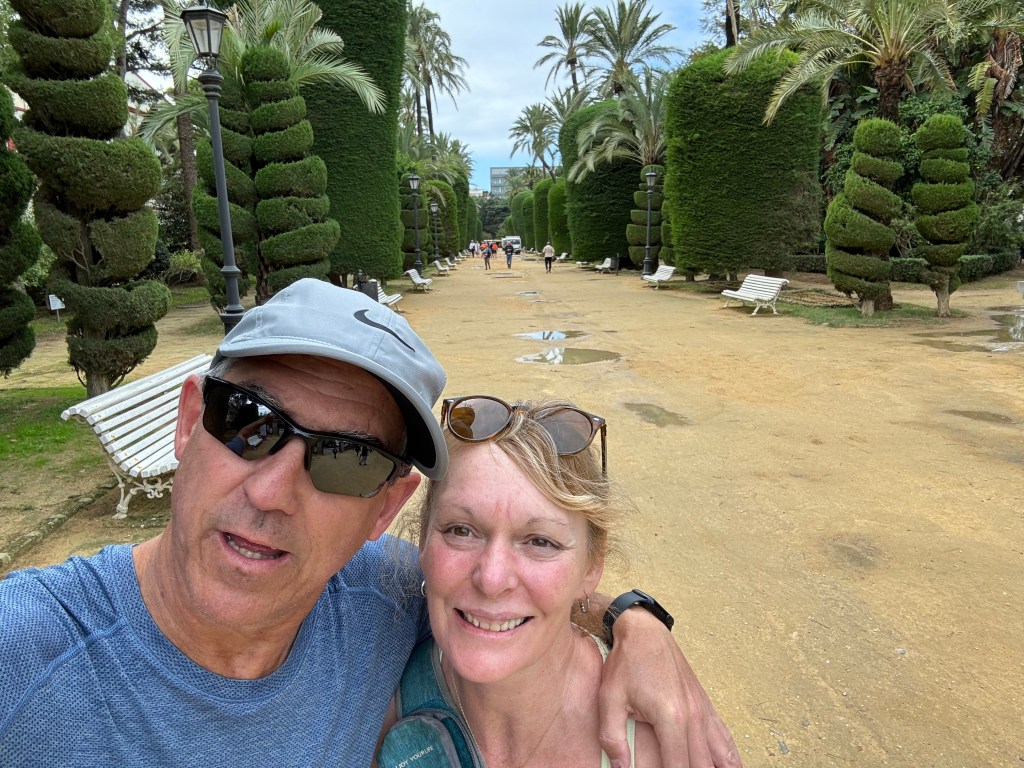
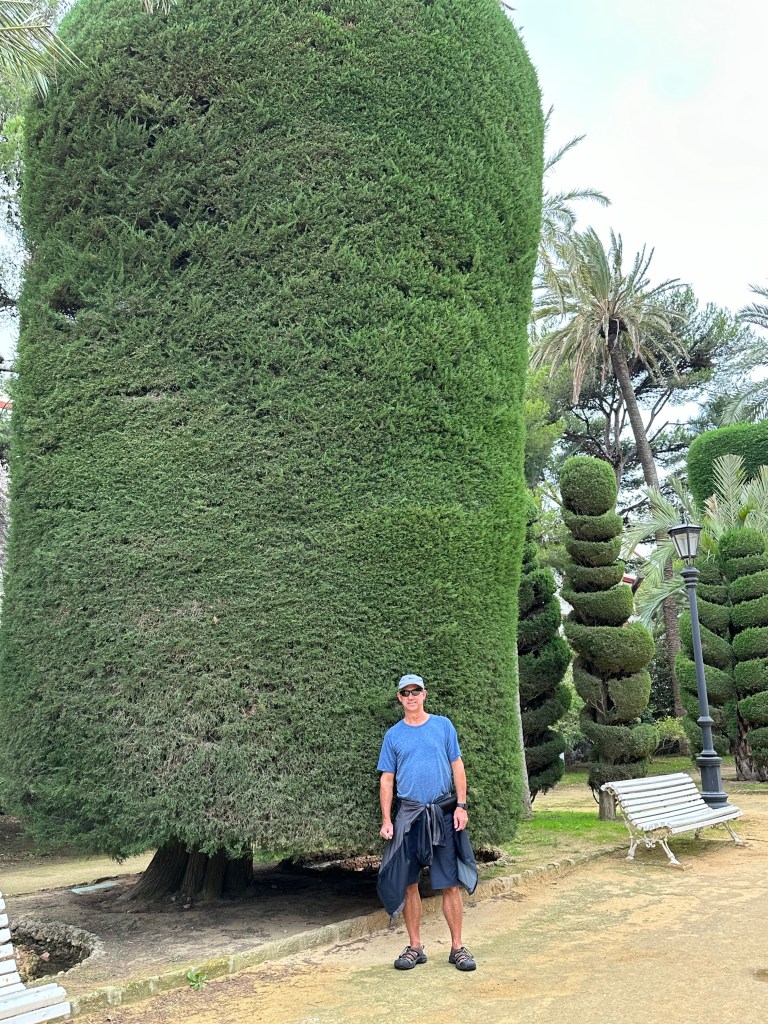
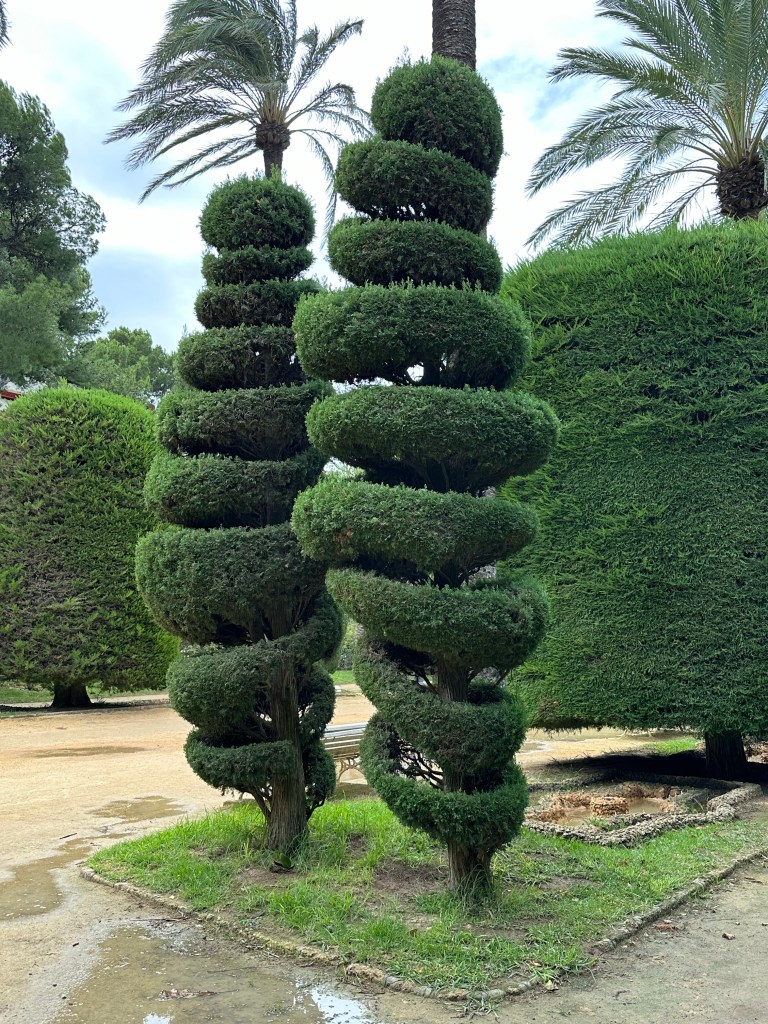
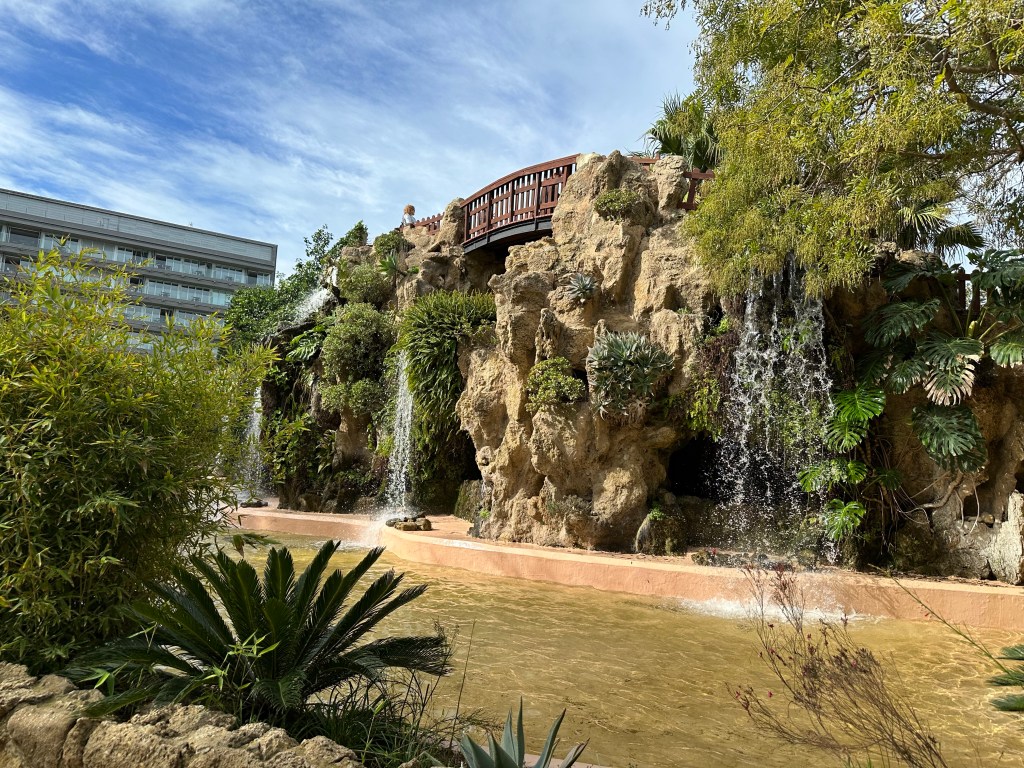
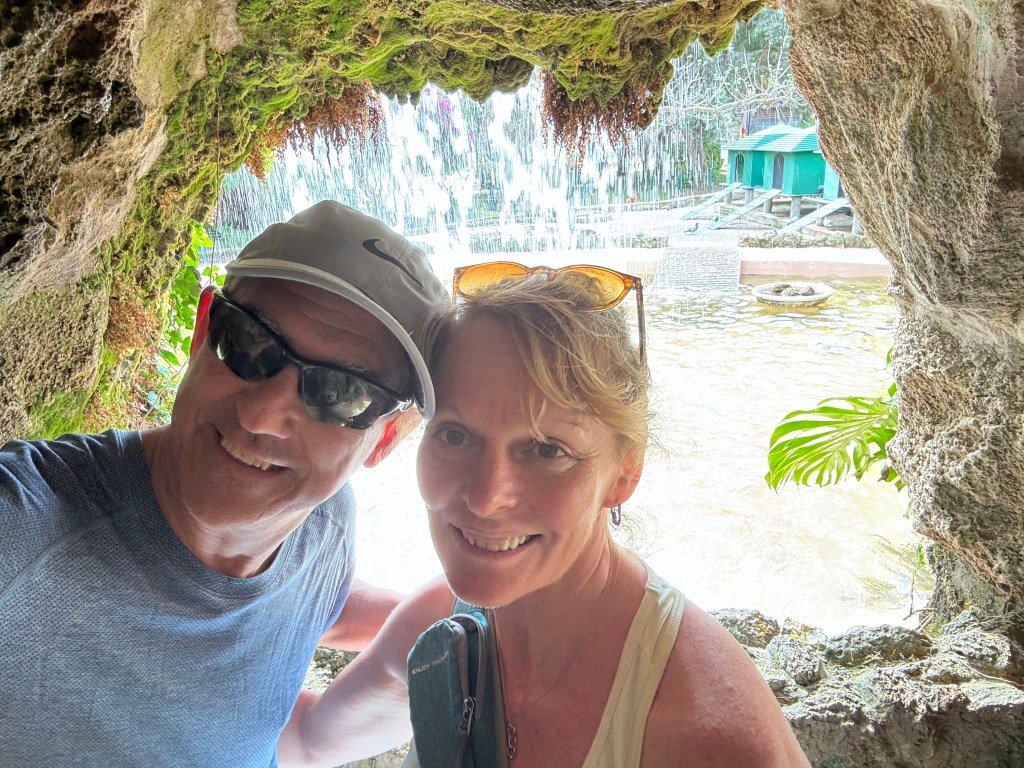
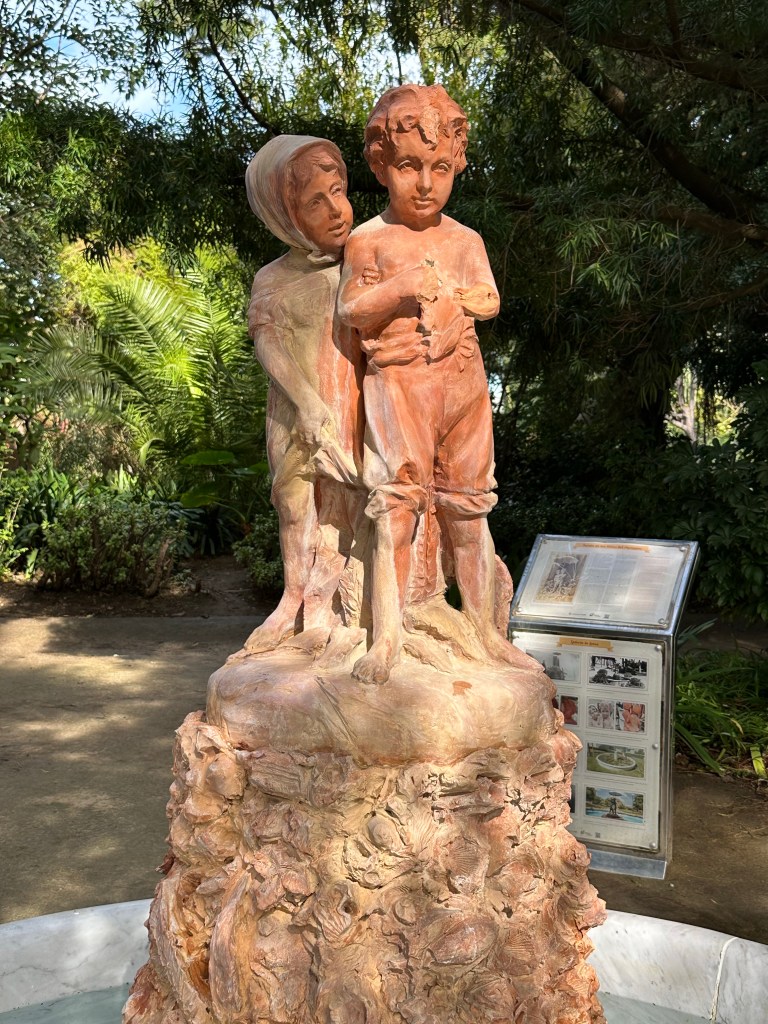
As we made our way through the main entrance of Parque Genovés we were presented with a central walkway flanked by common cypresses and California cypresses trees, pruned into rounded shapes typical of an English-style topiary. Within the park was a pond with a large waterfall and grotto as well as the famous “Children under the Umbrella” fountain sculpture depicting the children from the story written by Jacques-Henri Bernardin de Saint-Pierre and published in 1787.
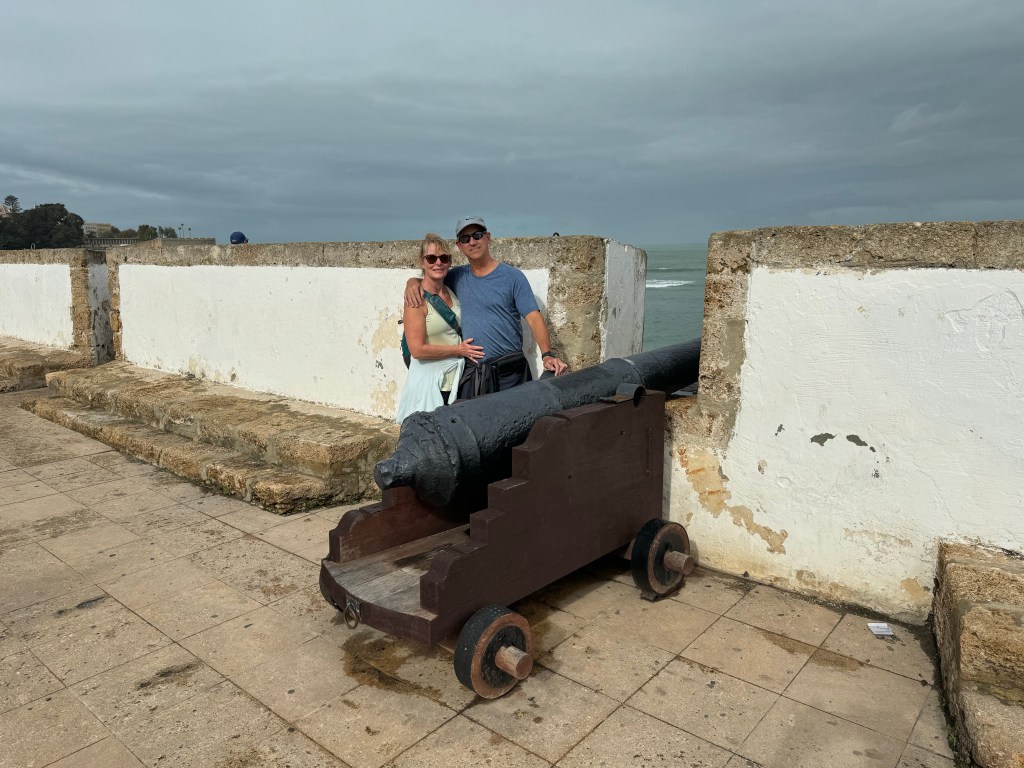
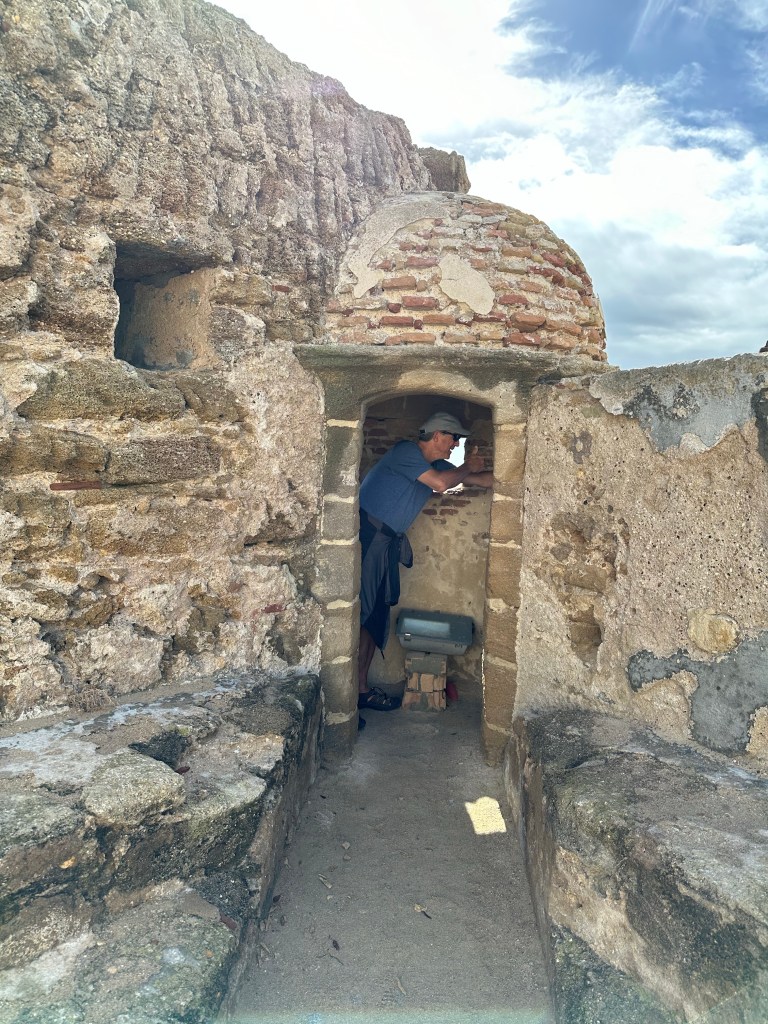
Our next stop was the Santa Catalina Castle which is Cádiz’s oldest military structure. The construction of this fortress began in 1598, two years after Anglo-Dutch troops conquered and plundered the provincial capital, under the orders of the Duke of Essex and Admiral Howard and was completed in the year 1621, with Spain under the rule of Phillip III. The sea-facing part of the castle assumes a shape akin to a three-tipped star and the part facing inland having two half-bastions and a moat, with one permanent bridge and another lifting bridge, lending the overall castle a pentagonal shape. In 1769, Charles III ordered that the castle be converted into a military prison. It served this role until 1991, when the Spanish Ministry of Defence stopped using it for military purposes.
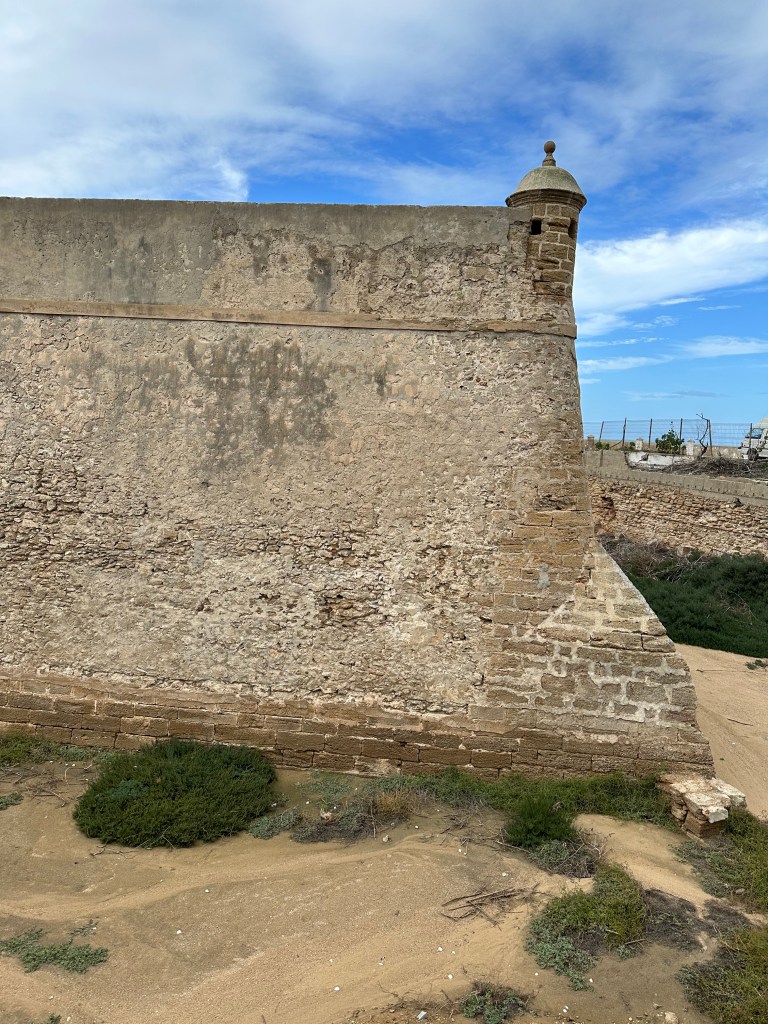
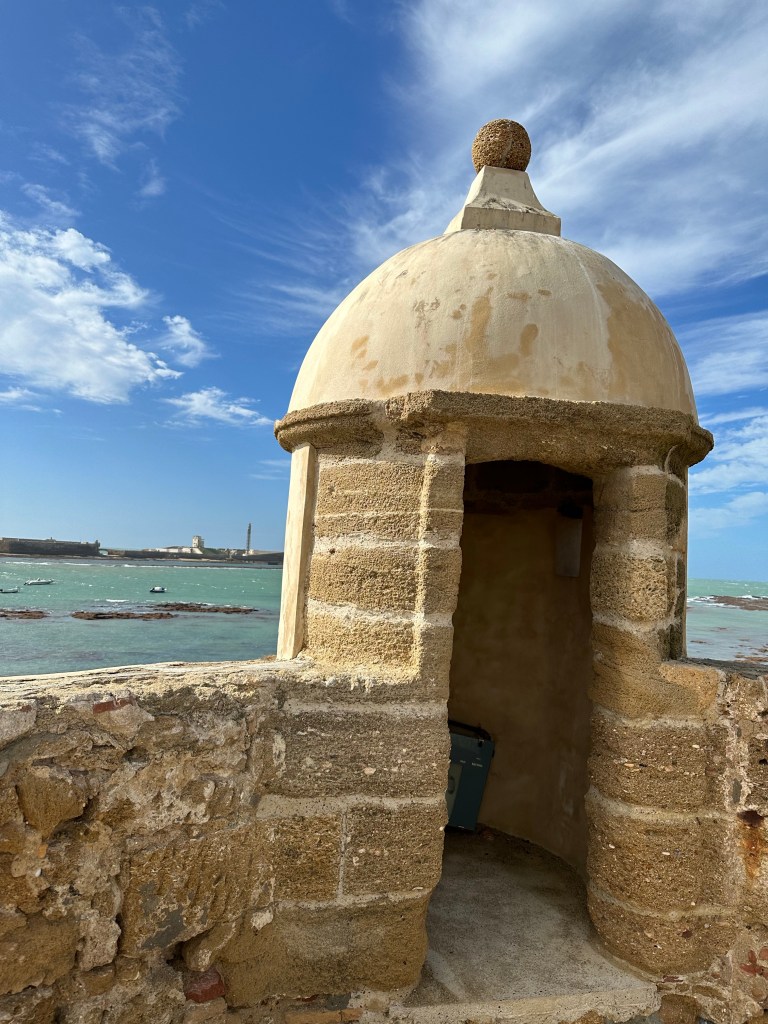
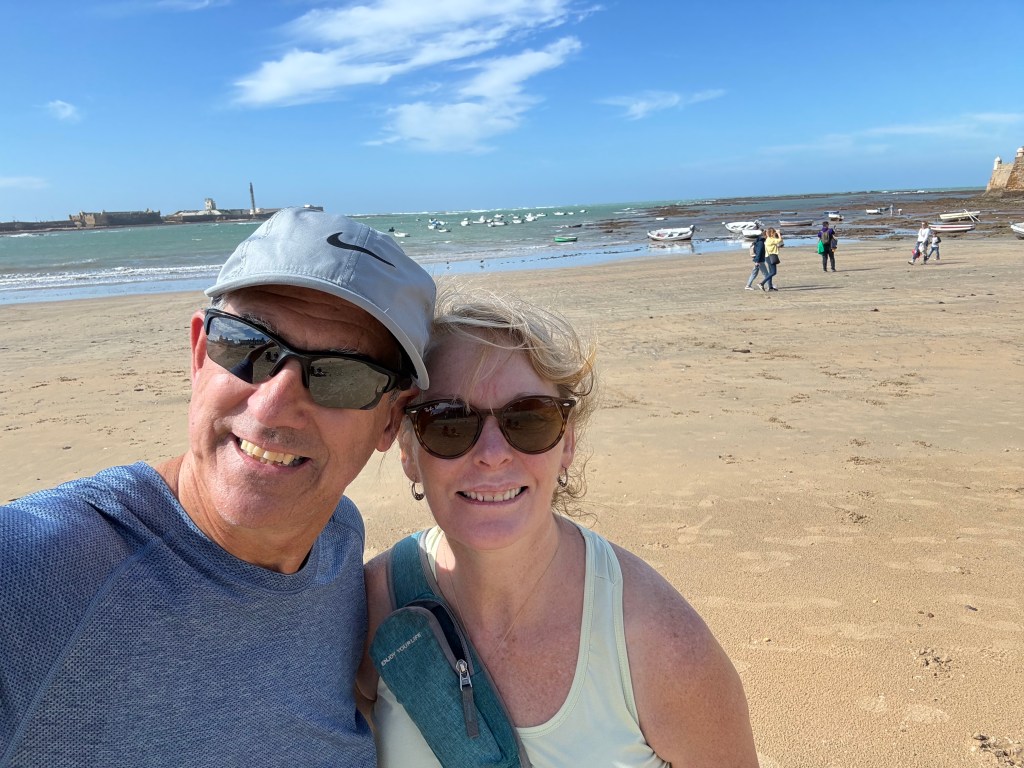
From the castle we made our way across La Caleta beach which lies between the Santa Catalina Castle and the San Sebastián Castle. This beautiful sandy beach is one of the most popular beaches in Cadiz.
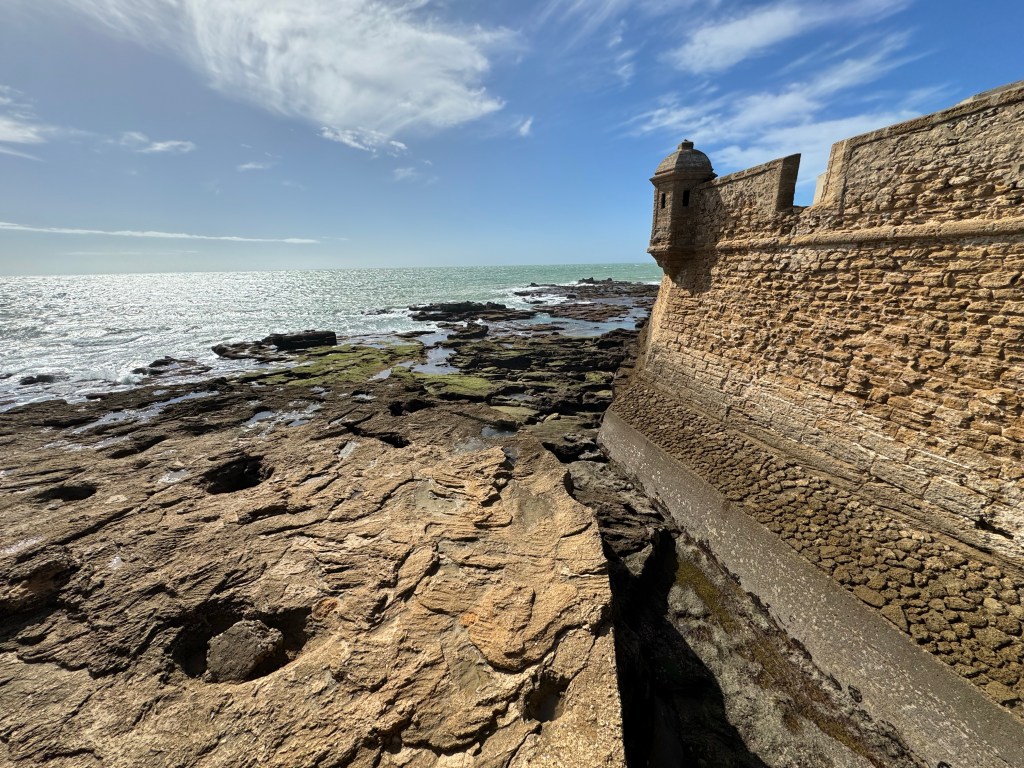
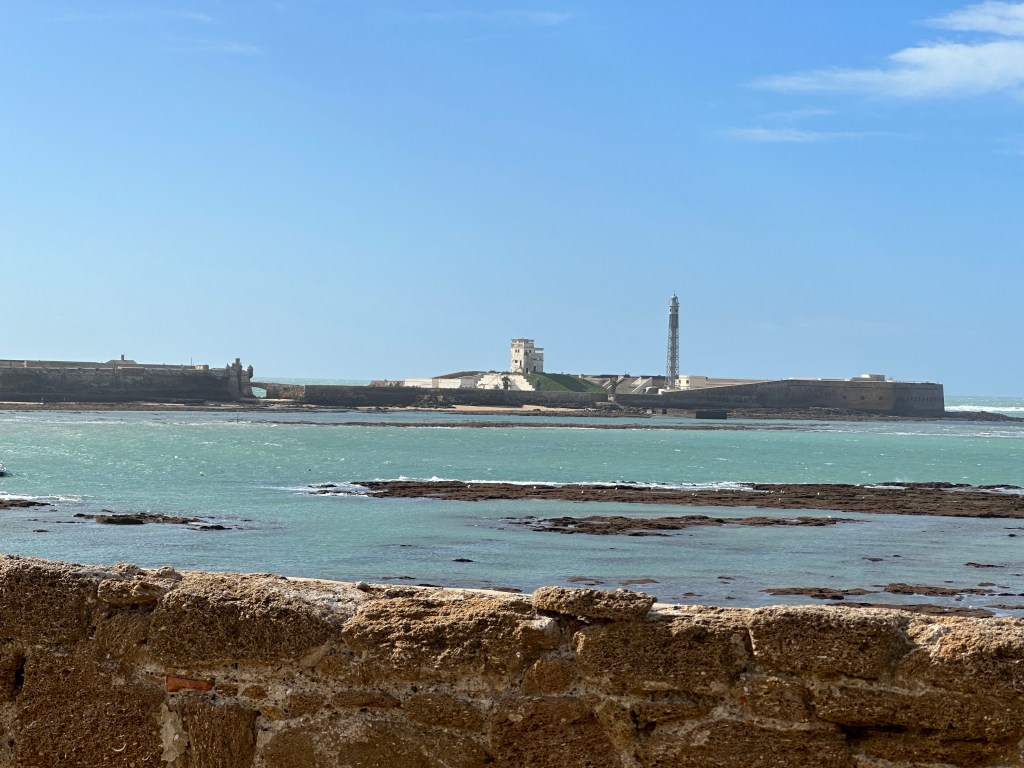
Though the San Sebastián Castle was not open to the public we were able to walk up the castle’s causeway to get a closer look at it.
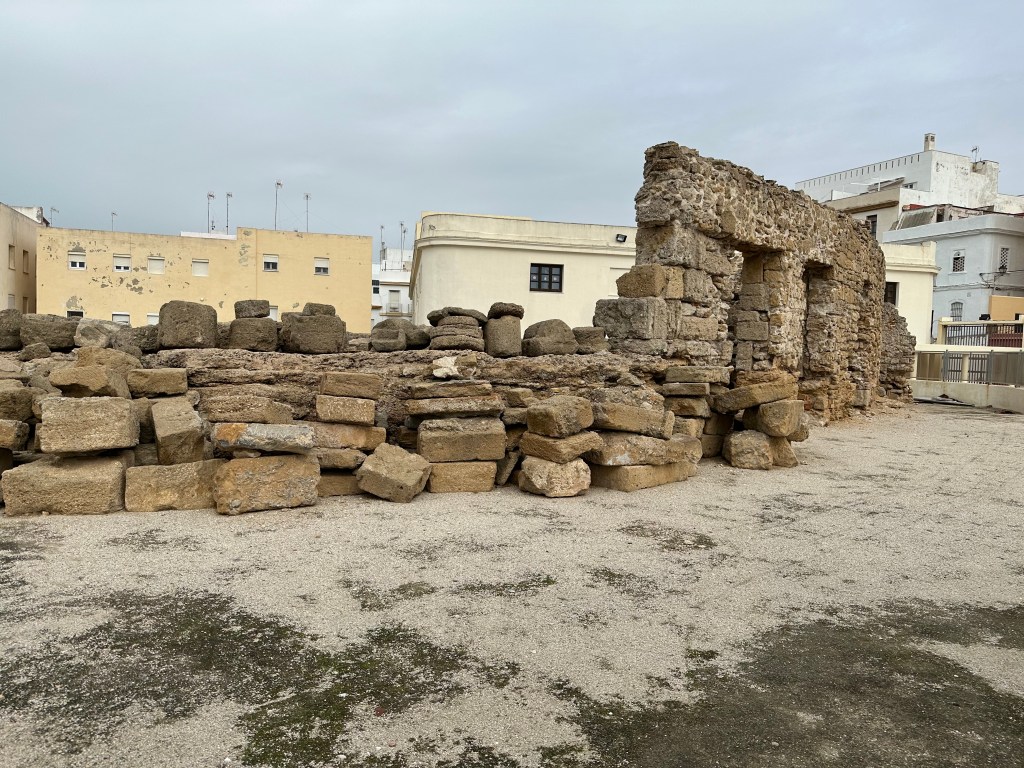
From here we continued walking along the promenade to the Roman Theatre and the cathedral of Cadiz.
The Roman theatre is the oldest Roman theatre in Spain. It was accidentally discovered in 1980 during excavations of the Castillo de la Villa due to a fire which destroyed part of the city. The theatre, constructed by order of Lucius Cornelius Balbus (minor) during the 1st century BC, is the second-largest Roman theatre in the world, surpassed only by the theatre of Pompeii.
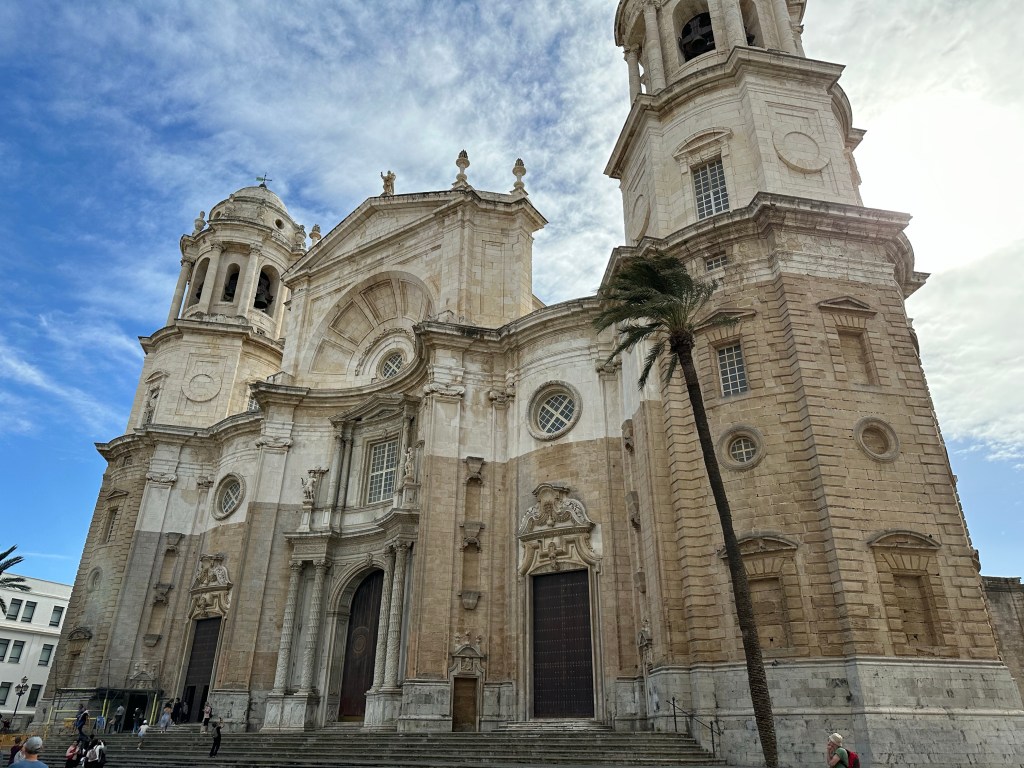
Cádiz Cathedral is a Roman Catholic church built between 1722 and 1838 resulting in a mix of baroque and neoclassical architectural styles.
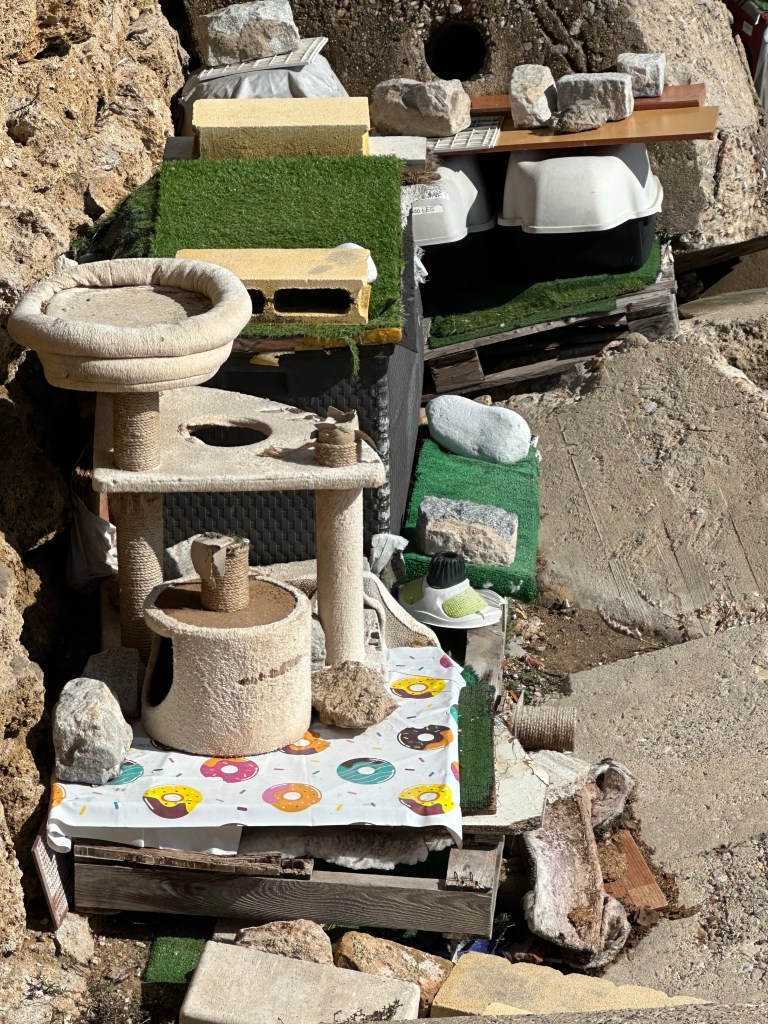
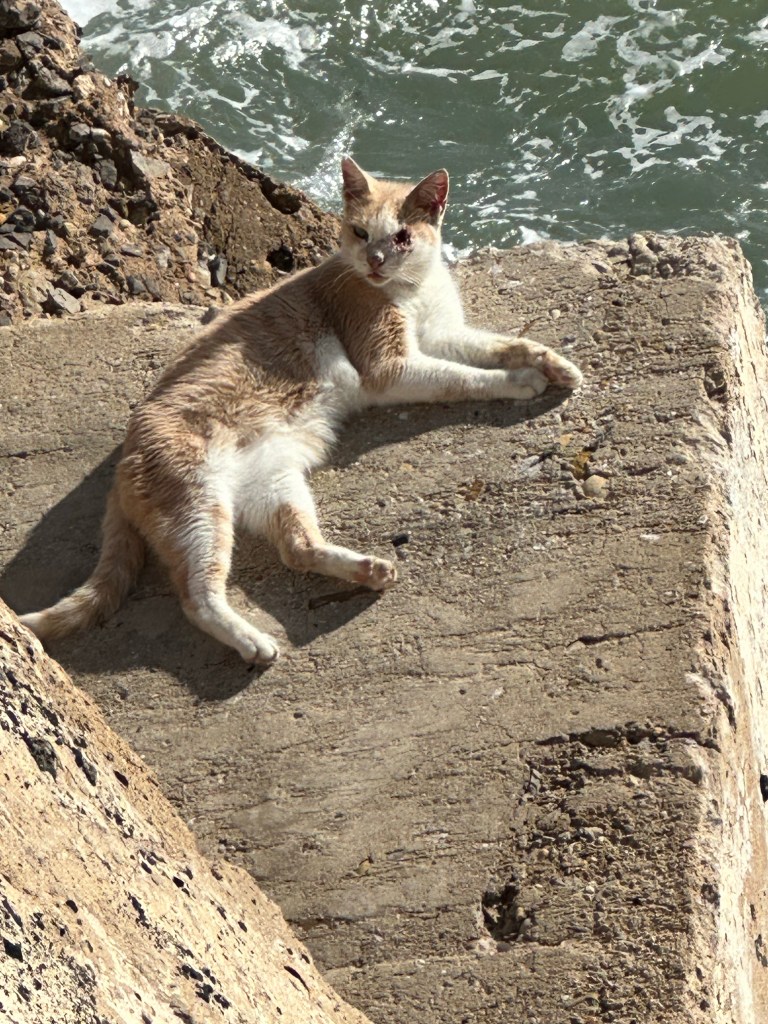
As we walked along the promenade we noticed these make shift houses between the city wall and the ocean. Our first thought was perhaps homeless individuals lived here and then quickly realized it was cats.
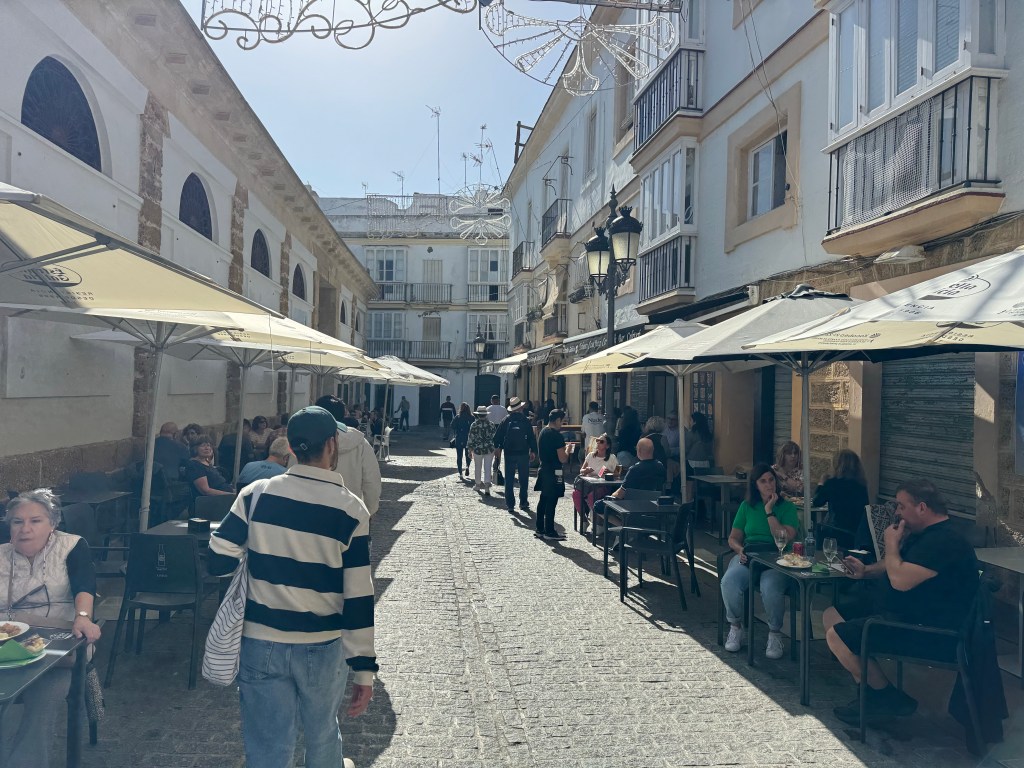
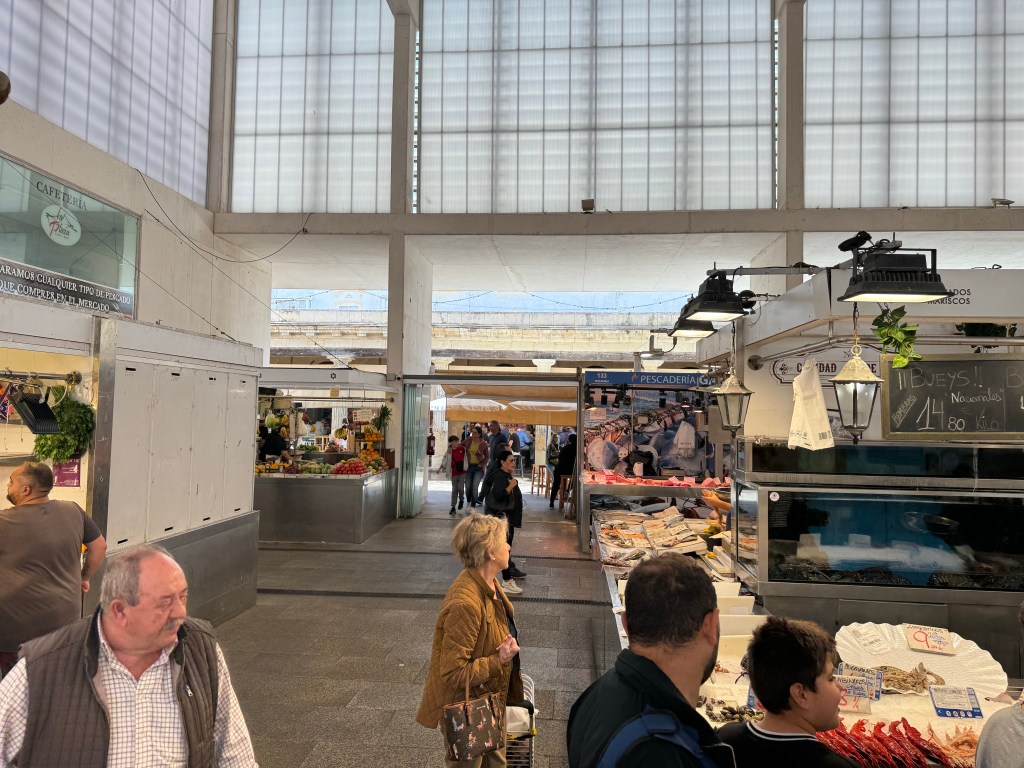
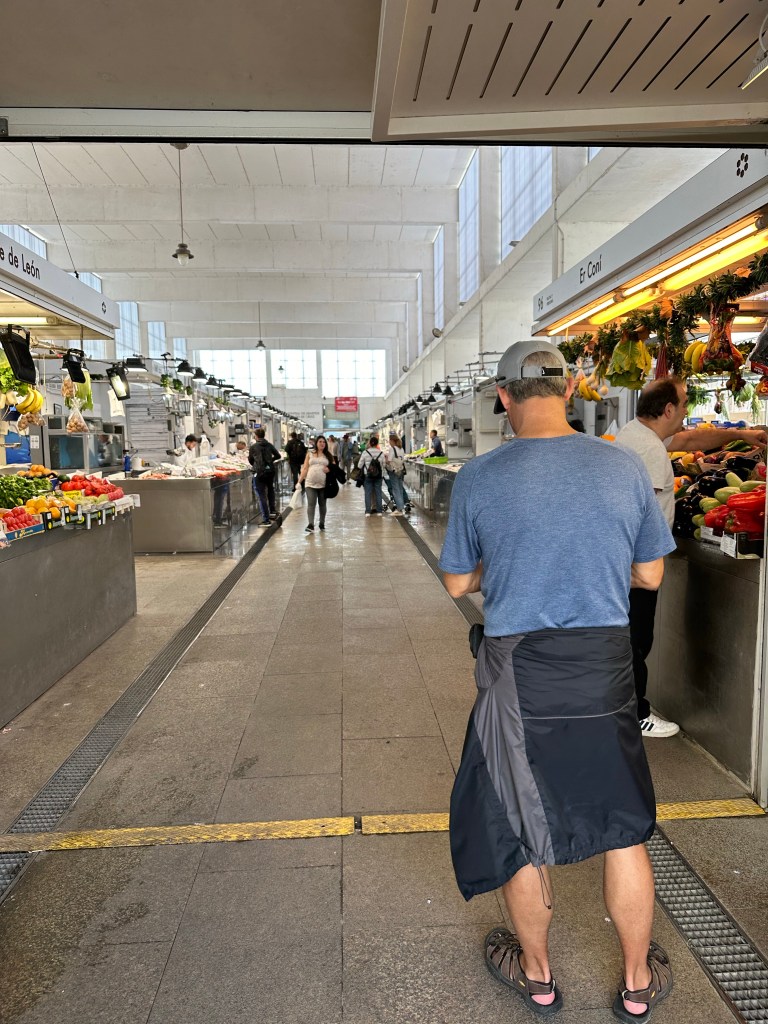
Before heading back to the ship we strolled through the narrow cobblestone streets and the city marketplace. I am always amazed at the European markets – the fish, the vegetables and other products- and the local hustle and bustle.
It was a great day. I would recommend a visit to Cádiz if you are ever in southeast Spain.
 Baker Vacations
hi guys. Looks awesome. I’m sure the cat pic was for me lol. Keep the pics coming. Such remarkable scenery and history.
LikeLiked by 1 person
Knew you would like the cats 🙂
LikeLike